
Presbyopia & Cataract Lenses
Choosing the right multifocal intraocular lens. ClearSeoul Eye Clinic offers cataract surgery in korea, a 2-minute walk from Gangnam Station, with English-speaking medical coordinators throughout and the same price for international and Korean patients — no hidden markups. We help plan your pre-op exam and trip, if you want to know the cost of cataract surgery in Korea and read reviews from international patients. Book a one-on-one consultation today.
Cataract Surgery in Korea: Choosing Presbyopia & Cataract Lenses
- Overview: Choosing the right multifocal intraocular lens
- Length of Stay: We recommend planning a trip of at least 4 days/3 nights (including a next-morning post-op follow-up).
- Interpreter: English and Chinese medical interpreters are with you throughout — from the pre-op exam and consultation to surgery and post-op follow-up, professional staff help you communicate every step of the way.
Why Decide on Your Intraocular Lens Here?
An intraocular lens stays in your eye for life — here's what actually affects the choice and your trip planning.
A monofocal lens focuses at a single distance (usually far), while a multifocal lens helps you see clearly at multiple distances — the right choice depends on your individual lifestyle.
Some patients notice halos or glare at night at first; most adapt over time. We recommend a thorough discussion of your lifestyle before deciding.
A pre-visit consultation can help map out your lifestyle and expectations, though the final lens choice is confirmed only after your in-person pre-op exam.
From pre-op exam through consultation to completed cataract surgery, the whole process takes about 2–3 hours and fits into a single day; plan for at least 4 days/3 nights, or up to about 7 days for a more comfortable pace.
Procedure Overview
The outcome of cataract surgery depends greatly on how the intraocular lens (IOL) that replaces the clouded lens is chosen. Because an IOL stays in the eye for life, the decision must be made carefully, taking into account the patient's lifestyle, occupation, and eye condition. A monofocal lens focuses on a single distance—either far or near—offering excellent clarity at that distance, but glasses may be needed for others. A multifocal lens, by contrast, creates multiple focal points through diffractive and refractive structures to broadly support far, intermediate, and near vision, making it suitable for those who wish to reduce their dependence on glasses after surgery. More recently, extended depth-of-focus (EDOF) and trifocal lenses that smoothly bridge intermediate distances are also used. In addition, for patients with astigmatism, a toric lens can correct the astigmatism at the same time, allowing for cleaner far, intermediate, and near vision. However, every lens has pros and cons, and factors such as nighttime glare and the adaptation period vary by lens type and individual. * The optimal lens depends on detailed examination results and lifestyle, so please choose after thorough consultation with a specialist.
Presbyopia & Cataract Lenses — Clinic & Equipment
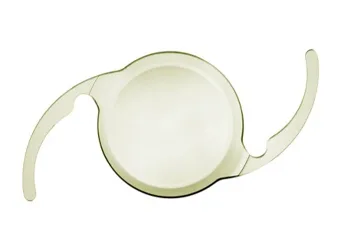
The outcome of cataract surgery depends greatly on how the intraocular lens (IOL) that replaces the clouded lens is chosen. Because an IOL stays in the eye for life, the decision must be made carefully, taking into account your lifestyle, occupation, and eye condition.
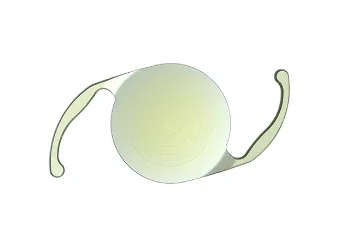
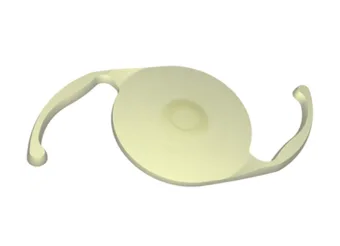
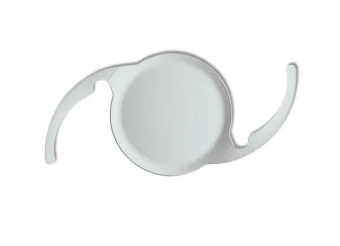
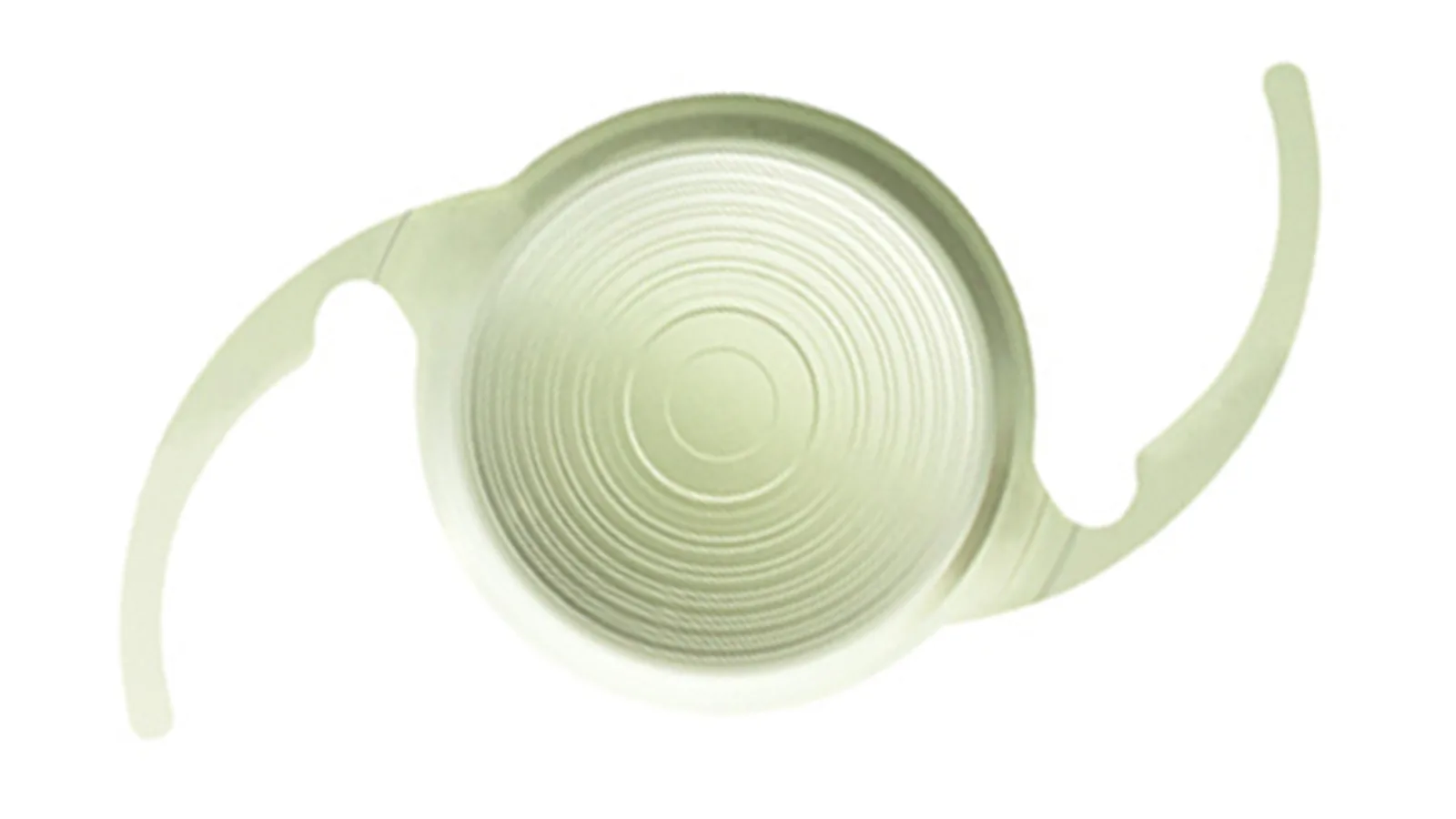
A monofocal lens focuses on a single distance, either far or near, offering excellent clarity at that distance, but glasses may be needed for others. A multifocal lens, by contrast, creates multiple focal points through diffractive and refractive structures to broadly support far, intermediate, and near vision, making it suitable for those who wish to reduce their dependence on glasses after surgery. More recently, extended depth-of-focus (EDOF) and trifocal lenses that smoothly bridge intermediate distances are also used.
For patients with astigmatism, a toric lens can correct the astigmatism at the same time, allowing for cleaner far, intermediate, and near vision. However, every lens has pros and cons, and factors such as nighttime glare and the adaptation period vary by lens type and individual. * The optimal lens depends on detailed examination results and lifestyle, so please choose after thorough consultation with a specialist.
The concentric ring pattern etched into the lens surface is exactly what lets a multifocal IOL create several focal points at once through its diffractive structure, covering far, intermediate and near vision together — unlike a monofocal lens, which stays sharp at only one distance. When astigmatism is also present, a toric lens can correct it at the same time, and a Gangnam eye clinic's Korean cataract surgery matches patients to the right combination among monofocal, multifocal, EDOF and trifocal lenses based on their occupation and daily habits.
Who It's For
Treatment Process
Equipment Used
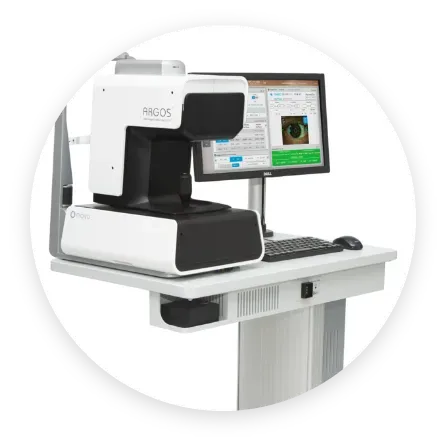
An optical biometer that precisely measures axial length and corneal curvature before cataract and presbyopia surgery to calculate intraocular lens power, supporting accurate lens selection.
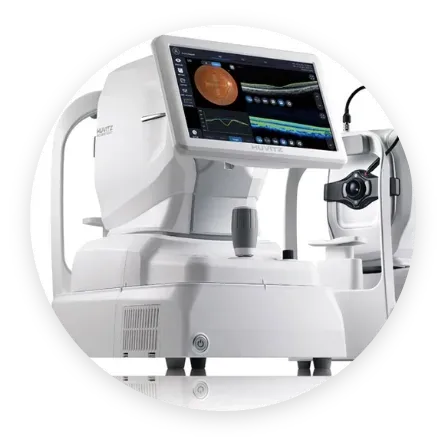
An optical coherence tomography device that captures cross-sections of the retina and optic nerve without contact, supporting early detection of glaucoma and retinal disease.
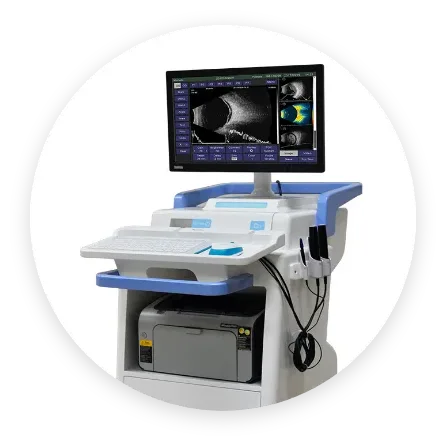
An ophthalmic ultrasound system that measures internal eye structures and axial length, supporting cataract surgical planning and diagnosis of eye conditions.
Expected Results
- Monofocal lens: sharp vision at a specific distance
- Multifocal lens: broad far/intermediate/near vision with less reliance on glasses
- Toric lens: simultaneous correction of astigmatism
Frequently Asked Questions
Monofocal focuses at one distance (usually far), so glasses may be needed for others; multifocal helps across distances. Each has trade-offs, chosen to fit your vision needs.
Directions
6F, 17 Seocho-daero 77-gil, Seocho-gu, Seoul (BLOCK77)
Incheon Airport → Seoul Station (Express Train, ~43 min) → transfer to Line 2 or Sinbundang Line → Gangnam Station
Incheon Airport → bus toward Gangnam/Yeoksam (travel time varies with traffic)
Varies with traffic; can take longer during peak hours
※ Actual travel time varies with traffic and departure schedule; for reference only.