
Glaucoma & Its Symptoms
Understanding glaucoma and the retina. ClearSeoul Eye Clinic offers glaucoma treatment in korea, a 2-minute walk from Gangnam Station, with English-speaking medical coordinators throughout and the same price for international and Korean patients — no hidden markups. We help plan your pre-op exam and trip, if you want to know the cost of glaucoma treatment in Korea and read reviews from international patients. Book a one-on-one consultation today.
Glaucoma Treatment in Korea: Choosing Glaucoma & Its Symptoms
- Overview: Understanding glaucoma and the retina
- Length of Stay: Your actual length of stay depends on your pre-op exam results and follow-up schedule.
- Interpreter: English and Chinese medical interpreters are with you throughout — from the pre-op exam and consultation to surgery and post-op follow-up, professional staff help you communicate every step of the way.
Procedure Overview
Glaucoma is a disease in which the optic nerve is gradually damaged by various causes such as elevated eye pressure, leading to a progressively narrowing field of vision. Inside the eye, the ciliary body continuously produces a fluid called aqueous humor, which drains out through an outflow structure called the trabecular meshwork, maintaining a stable intraocular pressure. However, when the trabecular meshwork malfunctions and the aqueous humor cannot drain properly, the eye pressure rises, and this elevated pressure compresses and damages the optic nerve. The most notable feature of glaucoma is that there are almost no noticeable symptoms in the early stages. Visual field loss usually begins in the periphery and slowly progresses inward, so by the time a patient feels discomfort, the disease has often already advanced considerably. As it progresses, the peripheral field becomes blurred and blind spots appear, and in late stages tunnel vision—where only the center remains visible—may develop. In acute cases where eye pressure rises suddenly, severe eye pain, headache, nausea, blurred vision, and halos resembling rainbows around lights may occur. Because a damaged optic nerve is difficult to restore, early detection and consistent management through regular eye pressure and optic nerve examinations are more important than anything else.
Glaucoma & Its Symptoms — Clinic & Equipment
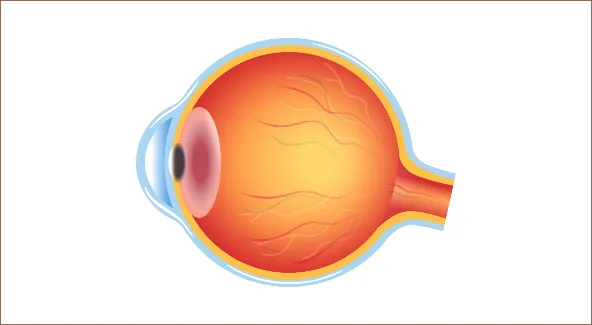
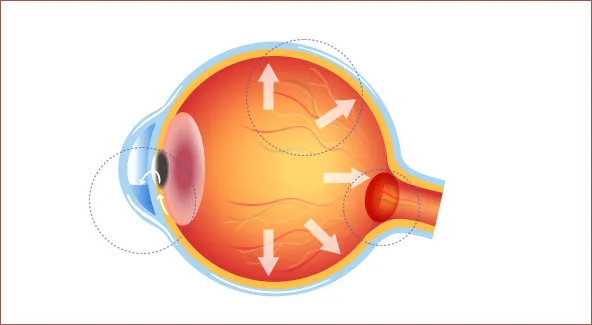



Glaucoma is a disease in which the optic nerve is gradually damaged by various causes such as elevated eye pressure, leading to a progressively narrowing field of vision. Inside the eye, the ciliary body continuously produces a fluid called aqueous humor, which drains out through an outflow structure called the trabecular meshwork, maintaining a stable intraocular pressure. However, when the trabecular meshwork malfunctions and the aqueous humor cannot drain properly, the eye pressure rises, and this elevated pressure compresses and damages the optic nerve.
The most notable feature of glaucoma is that there are almost no noticeable symptoms in the early stages. Visual field loss usually begins in the periphery and slowly progresses inward, so by the time a patient feels discomfort, the disease has often already advanced considerably. As it progresses, the peripheral field becomes blurred and blind spots appear, and in late stages tunnel vision—where only the center remains visible—may develop.
In acute cases where eye pressure rises suddenly, severe eye pain, headache, nausea, blurred vision, and halos resembling rainbows around lights may occur. Because a damaged optic nerve is difficult to restore, early detection and consistent management through regular eye pressure and optic nerve examinations are more important than anything else.
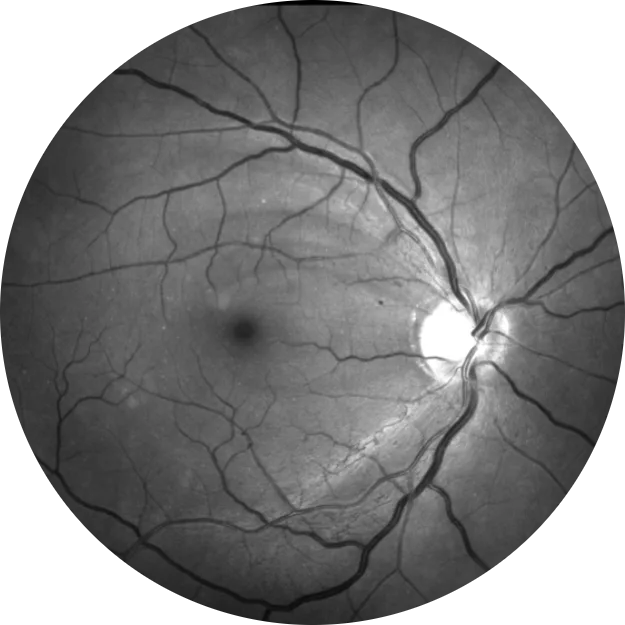
The three images trace the full arc of glaucoma in sequence: a normal cross-section of the eye, a diagram where pressure radiates outward simultaneously from three points — the drainage angle, the mid-globe, and the optic nerve head — and a photo of a patient pressing hard on the bridge of the nose with a visibly exhausted expression. That visual progression explains why glaucoma is so easily overlooked: pressure is already spreading across multiple points inside the eye well before a patient notices anything, often only recognizing a problem once eye strain or headaches set in. If you notice similar fatigue or changes in your field of vision, it's worth getting a precision exam at a Seoul eye clinic before symptoms become obvious.
Who It's For
Treatment Process
Equipment Used
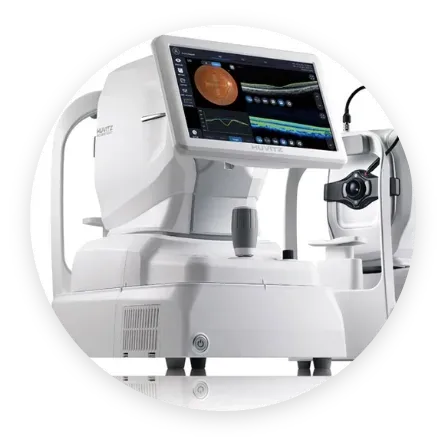
An optical coherence tomography device that captures cross-sections of the retina and optic nerve without contact, supporting early detection of glaucoma and retinal disease.
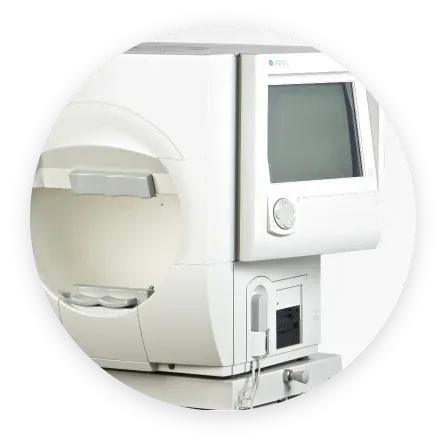
An automated perimeter that measures the range of vision the eye perceives, used to detect visual-field changes from glaucoma and to support regular monitoring.
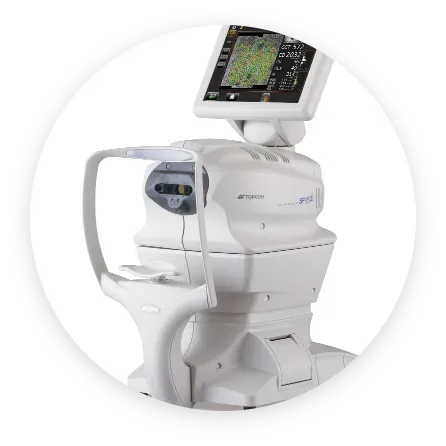
A TOPCON OCT system that captures cross-sectional images of the fine structures of the retina and optic nerve for precise monitoring of glaucoma and retinal changes.
Expected Results
- Helps you understand glaucoma more easily
- Clarifies the limits of self-detected early symptoms
- Builds awareness of the need for early screening
- Reviewing risk factors motivates preventive care
Frequently Asked Questions
In many cases there are almost no early symptoms, so it's easily missed. Field narrowing develops slowly, so early detection through regular screening is important.
Directions
6F, 17 Seocho-daero 77-gil, Seocho-gu, Seoul (BLOCK77)
Incheon Airport → Seoul Station (Express Train, ~43 min) → transfer to Line 2 or Sinbundang Line → Gangnam Station
Incheon Airport → bus toward Gangnam/Yeoksam (travel time varies with traffic)
Varies with traffic; can take longer during peak hours
※ Actual travel time varies with traffic and departure schedule; for reference only.