
Glaucoma & Treatment
Managing progression and treating glaucoma. ClearSeoul Eye Clinic offers glaucoma treatment in korea, a 2-minute walk from Gangnam Station, with English-speaking medical coordinators throughout and the same price for international and Korean patients — no hidden markups. We help plan your pre-op exam and trip, if you want to know the cost of glaucoma treatment in Korea and read reviews from international patients. Book a one-on-one consultation today.
Glaucoma Treatment in Korea: Choosing Glaucoma & Treatment
- Overview: Managing progression and treating glaucoma
- Length of Stay: Your actual length of stay depends on your pre-op exam results and follow-up schedule.
- Interpreter: English and Chinese medical interpreters are with you throughout — from the pre-op exam and consultation to surgery and post-op follow-up, professional staff help you communicate every step of the way.
Glaucoma Treatment at a Glance
Here's what actually affects your treatment direction and long-term management.
Vision loss already sustained is difficult to reverse; treatment aims to appropriately lower eye pressure and slow further optic nerve damage and visual field loss.
Depending on glaucoma type, stage of progression, and your condition, treatment is staged appropriately — from medication to laser therapy to surgery.
Glaucoma is about continuous management and often requires long-term pressure-lowering eye drops; duration and dosing are adjusted with your doctor based on progression — never stop medication on your own.
If only eye drops and periodic monitoring are needed, a 2-day/1-night trip is enough for the exam and consultation; even with same-visit laser treatment, the whole process takes about 2–3 hours and finishes the same day — 2 days/1 night is usually sufficient, and you can continue care at a local provider back home with your records.
Procedure Overview
The goal of glaucoma treatment is not to restore the already-damaged optic nerve, but to lower eye pressure appropriately to prevent further optic nerve damage and visual field deterioration and to slow progression. Depending on the type and stage of glaucoma and the patient's condition, the most suitable method—medication, laser treatment, or surgery—is applied in a stepwise manner. The most fundamental approach, medication, involves the consistent use of pressure-lowering eye drops that regulate eye pressure by reducing aqueous humor production or increasing its drainage. It is very important not to stop the drops on one's own judgment, but to instill them consistently according to the medical team's instructions. When medication alone does not control eye pressure sufficiently, or for certain types of glaucoma, laser treatment is performed. The laser improves the drainage function of the trabecular meshwork through which aqueous humor flows out, or opens the blocked drainage pathway in angle-closure glaucoma to lower the pressure. When control remains difficult even with these methods, glaucoma surgery is considered to create a new pathway for aqueous humor to drain. Whichever method is used, the key is to begin early, manage eye pressure stably, and track the course regularly.
Glaucoma & Treatment — Clinic & Equipment

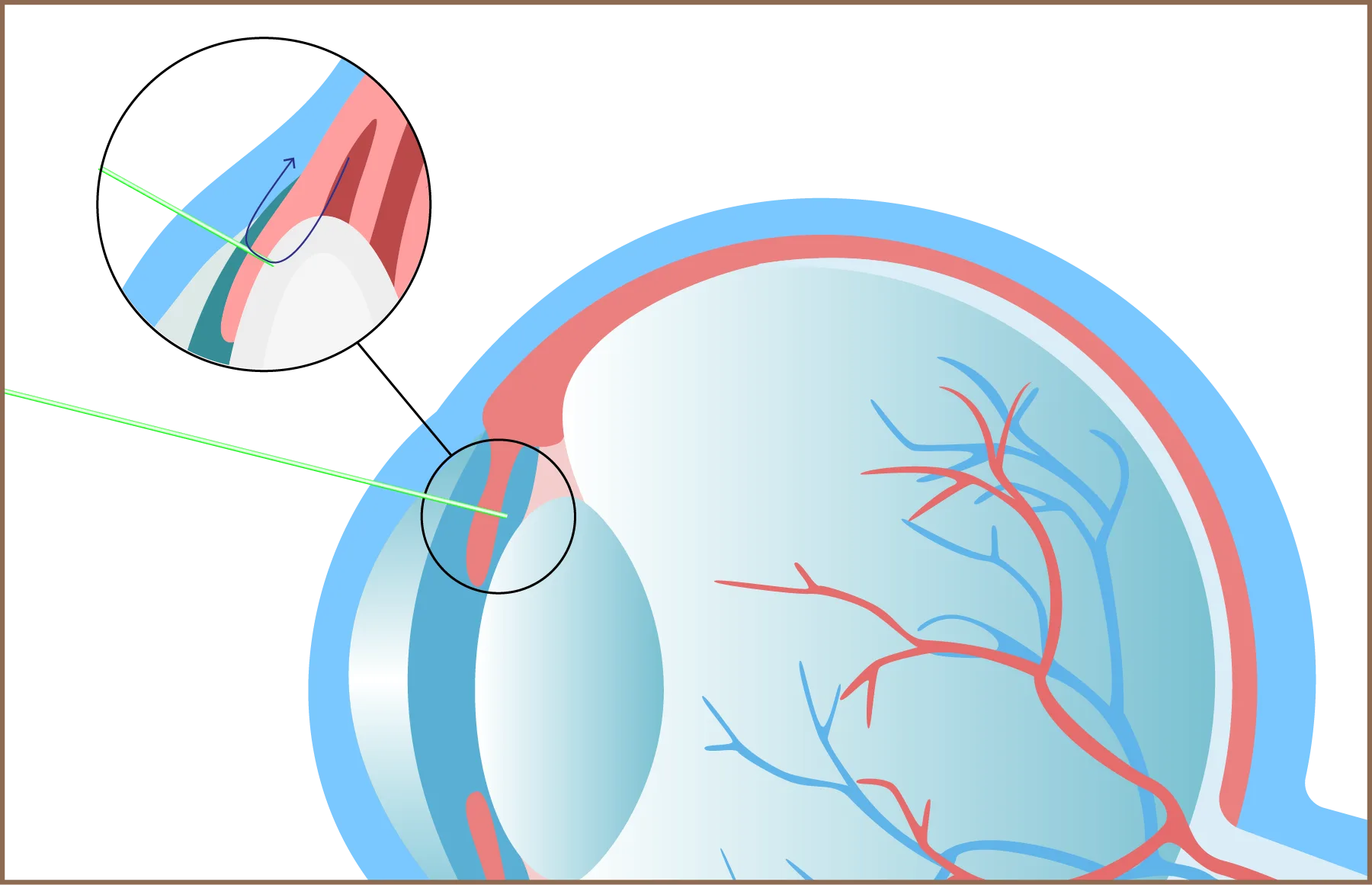
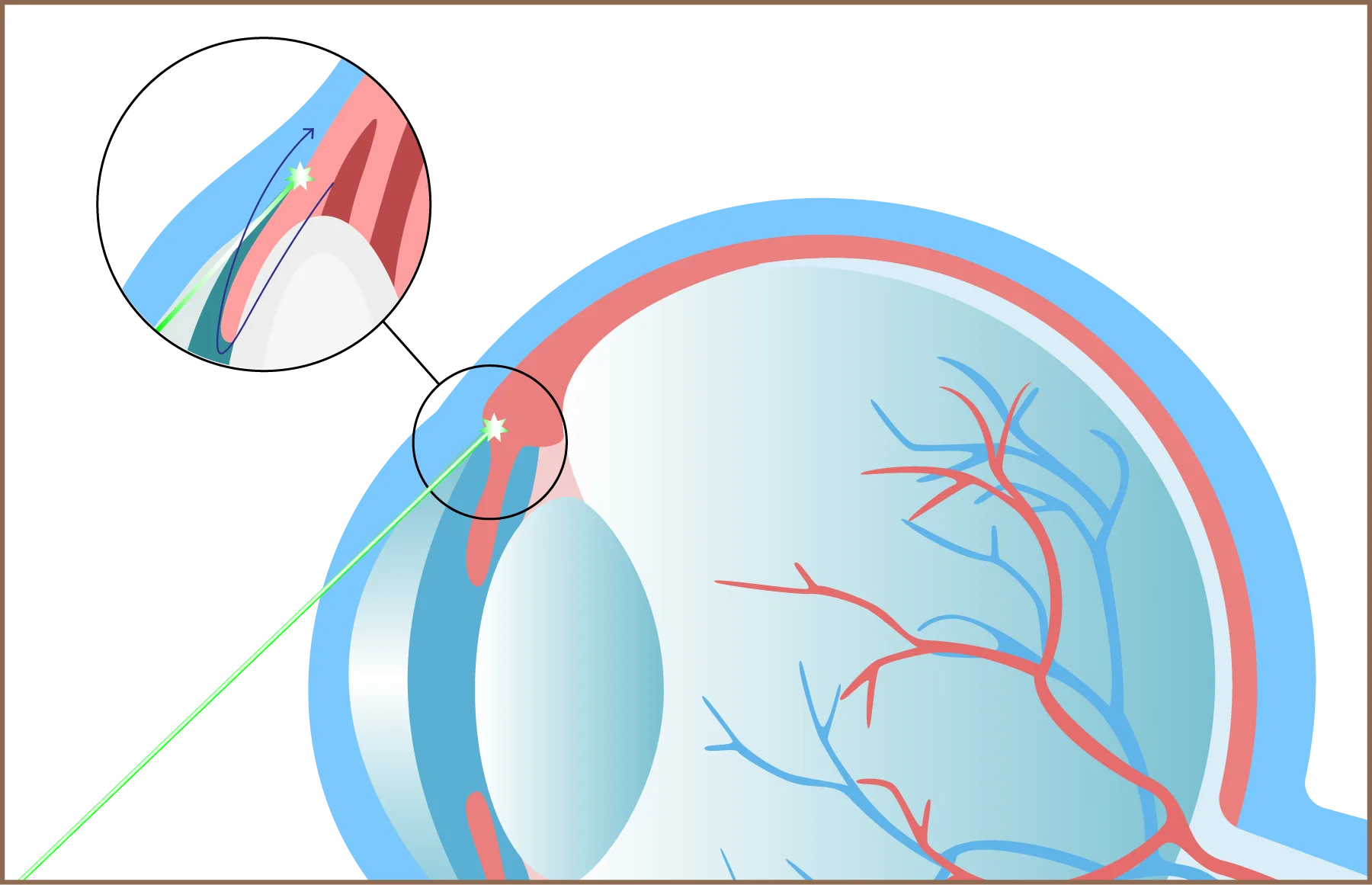
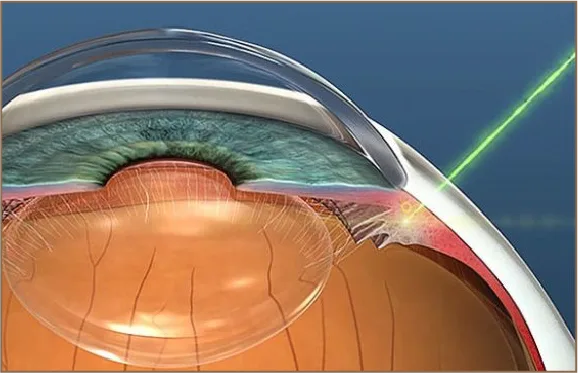
The goal of glaucoma treatment is not to restore the already-damaged optic nerve, but to lower eye pressure appropriately to prevent further optic nerve damage and visual field deterioration and to slow progression. Depending on the type and stage of glaucoma and the patient's condition, the most suitable method—medication, laser treatment, or surgery—is applied in a stepwise manner.
The most fundamental approach, medication, involves the consistent use of pressure-lowering eye drops that regulate eye pressure by reducing aqueous humor production or increasing its drainage. It is very important not to stop the drops on one's own judgment, but to instill them consistently according to the medical team's instructions.
When medication alone does not control eye pressure sufficiently, or for certain types of glaucoma, laser treatment is performed. The laser improves the drainage function of the trabecular meshwork through which aqueous humor flows out, or opens the blocked drainage pathway in angle-closure glaucoma to lower the pressure. When control remains difficult even with these methods, glaucoma surgery is considered to create a new pathway for aqueous humor to drain. Whichever method is used, the key is to begin early, manage eye pressure stably, and track the course regularly.
The magnified inset shows the laser beam aimed precisely at the trabecular meshwork where aqueous humor drains, with an arrow marking the newly opened outflow direction — the core mechanism by which laser treatment improves drainage and lowers eye pressure. Paired with the normal eye-structure diagram and the photo of a patient visibly struggling with eye discomfort, the three images together trace the full treatment logic — from pressure imbalance to Gangnam eye clinic's precise laser intervention that restores aqueous outflow.
Who It's For
Treatment Process
Equipment Used
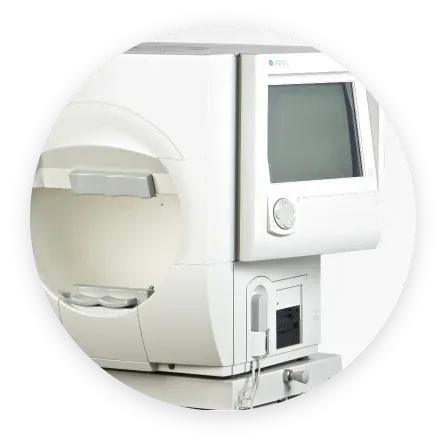
An automated perimeter that measures the range of vision the eye perceives, used to detect visual-field changes from glaucoma and to support regular monitoring.
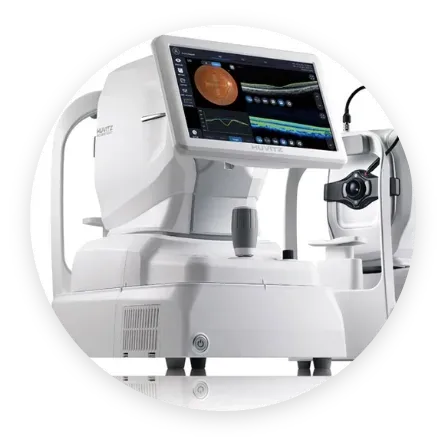
An optical coherence tomography device that captures cross-sections of the retina and optic nerve without contact, supporting early detection of glaucoma and retinal disease.
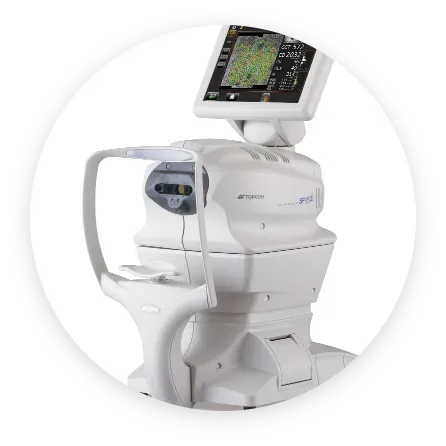
A TOPCON OCT system that captures cross-sectional images of the fine structures of the retina and optic nerve for precise monitoring of glaucoma and retinal changes.
Expected Results
- Controls eye pressure with medication to slow the progression of optic nerve damage
- Improves aqueous humor drainage with laser treatment to lower eye pressure
- Manages eye pressure by creating a new aqueous humor drainage pathway through surgery
Frequently Asked Questions
Often drops control pressure, but if control is insufficient, laser or surgery may be considered. The approach is stepwise based on your condition.
Directions
6F, 17 Seocho-daero 77-gil, Seocho-gu, Seoul (BLOCK77)
Incheon Airport → Seoul Station (Express Train, ~43 min) → transfer to Line 2 or Sinbundang Line → Gangnam Station
Incheon Airport → bus toward Gangnam/Yeoksam (travel time varies with traffic)
Varies with traffic; can take longer during peak hours
※ Actual travel time varies with traffic and departure schedule; for reference only.