
Radiofrequency Conjunctivochalasis Treatment
Laser treatment for conjunctivochalasis. ClearSeoul Eye Clinic offers dry eye treatment in korea, a 2-minute walk from Gangnam Station, with English-speaking medical coordinators throughout and the same price for international and Korean patients — no hidden markups. We help plan your pre-op exam and trip, if you want to know the cost of dry eye treatment in Korea and read reviews from international patients. Book a one-on-one consultation today.
Dry Eye Treatment in Korea: Choosing Radiofrequency Conjunctivochalasis Treatment
- Overview: Laser treatment for conjunctivochalasis
- Length of Stay: Your actual length of stay depends on your pre-op exam results and follow-up schedule.
- Interpreter: English and Chinese medical interpreters are with you throughout — from the pre-op exam and consultation to surgery and post-op follow-up, professional staff help you communicate every step of the way.
Why Choose RF Conjunctivochalasis Treatment?
For chronic dry eye caused by conjunctivochalasis, here's what this treatment actually offers.
Using the ACUTRON OcuRF device with a fine 70μm disposable probe, the entire treatment can be comfortably completed in under 5 minutes.
The probe's fine structure is optimized specifically for the eye, making treatment precise and safe, with fewer side effects and a quick recovery.
After treatment, loose conjunctival folds are reduced, restoring space for tears to pool — especially helpful for conjunctivochalasis-related dry eye that artificial tears alone can't resolve.
From pre-op exam through consultation to the completed treatment, the whole process takes about 2–3 hours and finishes the same day; a 2-day/1-night trip is usually enough, with a follow-up the next morning.
Procedure Overview
Radiofrequency conjunctivochalasis treatment uses radiofrequency energy to improve conjunctivochalasis (conjunctival folds), a condition in which the conjunctiva loosens and forms folds with age. When the conjunctiva becomes lax and develops many folds, the space where tears would normally pool disappears, so tears cannot stay in place properly, worsening dryness, foreign-body sensation, and tearing. After the procedure, the loosened conjunctival folds are reduced, restoring space for tears to pool and stabilizing the tear film. The procedure uses the ACUTRON OcuRF device together with an ultra-fine 70 μm (0.07 mm) single-use OcuRF needle. Radiofrequency current generated by the device is delivered through the electrode's contact point with the body, and the fine heat produced by contact resistance coagulates and contracts the loosened conjunctival tissue. Because the needle has a fine structure optimized for the eye, the treatment can be performed precisely and safely. It is carried out comfortably in under five minutes and is hygienic thanks to the single-use treatment product. Its advantages are minimal permanent side effects and rapid recovery, making it a suitable option for patients with conjunctivochalasis-related dry eye that does not improve with artificial tears alone.
Radiofrequency Conjunctivochalasis Treatment — Clinic & Equipment

Radiofrequency conjunctivochalasis treatment uses radiofrequency energy to improve conjunctivochalasis (conjunctival folds), a condition in which the conjunctiva loosens and forms folds with age. When the conjunctiva becomes lax and develops many folds, the space where tears would normally pool disappears, so tears cannot stay in place properly, worsening dryness, foreign-body sensation, and tearing. After the procedure, the loosened conjunctival folds are reduced, restoring space for tears to pool and stabilizing the tear film.
The procedure uses the ACUTRON OcuRF device together with an ultra-fine 70 μm (0.07 mm) single-use OcuRF needle. Radiofrequency current generated by the device is delivered through the electrode's contact point with the body, and the fine heat produced by contact resistance coagulates and contracts the loosened conjunctival tissue. Because the needle has a fine structure optimized for the eye, the treatment can be performed precisely and safely.
It is carried out comfortably in under five minutes and is hygienic thanks to the single-use treatment product. Its advantages are minimal permanent side effects and rapid recovery, making it a suitable option for patients with conjunctivochalasis-related dry eye that does not improve with artificial tears alone.
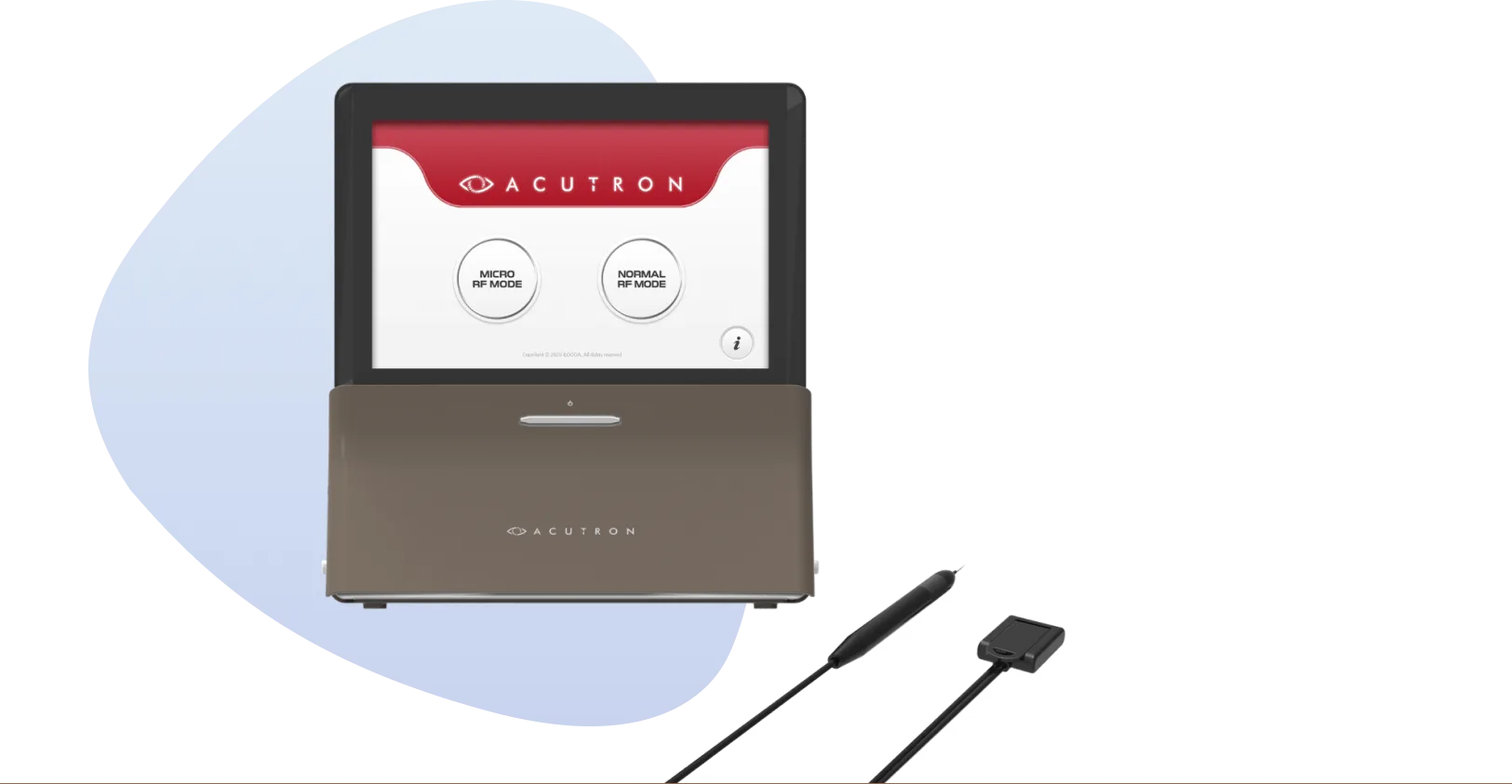
The ACUTRON radiofrequency device offers MICRO RF and NORMAL RF modes, paired with an ultra-fine 70μm single-use needle tip that lets energy level be tuned to each patient's degree of conjunctival laxity. In under five minutes it precisely tightens loosened conjunctival tissue, making this dry eye treatment in Korea a go-to option for patients whose conjunctivochalasis-related dryness doesn't respond to artificial tears alone.
Who It's For
Treatment Process
Equipment Used
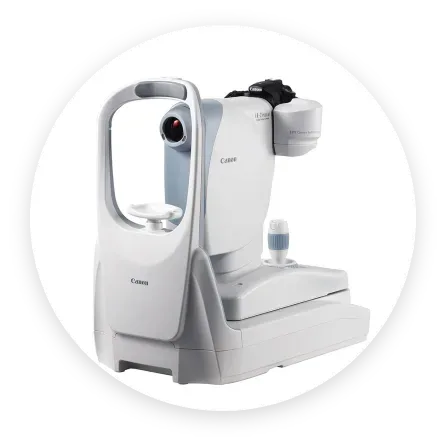
A Canon diagnostic imaging unit that photographs the retina and optic nerve at the back of the eye, used for comprehensive eye-health assessment.
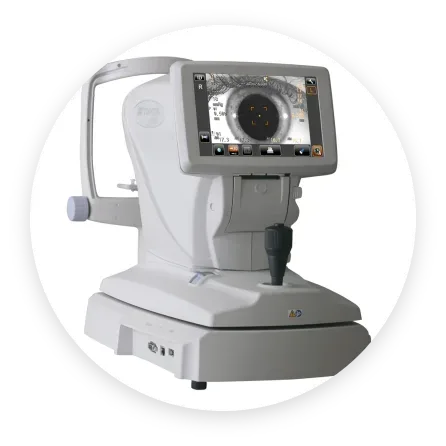
An automated device that quickly measures refractive errors — myopia, hyperopia, astigmatism — and corneal curvature, forming the basis for accurate prescription assessment.
Expected Results
- A short, comfortable, and safe procedure in under five minutes
- Minimal permanent side effects and rapid recovery
- Precise treatment with a fine structure optimized for the eye
- Hygienic and safe with a single-use treatment product
Frequently Asked Questions
Topical anesthesia keeps discomfort low. Temporary grittiness or redness may follow but usually subsides gradually.
Directions
6F, 17 Seocho-daero 77-gil, Seocho-gu, Seoul (BLOCK77)
Incheon Airport → Seoul Station (Express Train, ~43 min) → transfer to Line 2 or Sinbundang Line → Gangnam Station
Incheon Airport → bus toward Gangnam/Yeoksam (travel time varies with traffic)
Varies with traffic; can take longer during peak hours
※ Actual travel time varies with traffic and departure schedule; for reference only.