ClearSeoul Eye Clinic
ZEISS SMILE LASIK

Why Is SMILE Vision Correction a Standout Choice in Korea?

It's not just about seeing more clearly — it's about getting back to daily life with confidence. At ClearSeoul Eye Clinic, ZEISS SMILE LASIK corrects your vision through a corneal incision of only about 2mm, performed personally by Director Lim Tae-hyung — 20+ years of clinical experience and 20,000+ vision correction procedures — using the ZEISS VisuMax 500 high-speed precision laser system. It's one of the most closely watched procedures for recovery pace among LASIK clinics in Gangnam and vision correction surgery in Seoul.

KRW 2,500,000+
approx. NT$57,700 (for reference only — actual amount follows the day's exchange rate)
Optional Add-ons
Corneal Strengthening (Collagen Cross-Linking)KRW 300,000+/ approx. NT$6,900
Autologous Serum Eye Drops (optional add-on)KRW 200,000+/ approx. NT$4,600
Why ClearSeoul

Why Choose ClearSeoul Eye Clinic

ClearSeoul Eye Clinic is a 2-minute walk from Exit 10 of Gangnam Station — our Director has over 20 years of clinical experience and 20,000+ vision correction procedures performed (17 career highlights listed in the surgeon profile below)
Uses the ZEISS VisuMax 500 SMILE laser system — a 500kHz high-speed laser with low-energy ablation logic — one of the Gangnam-area LASIK clinics to adopt this equipment
Professional English and Chinese medical interpreters are with you throughout, from the pre-op exam to post-op follow-up
Same price for international and Korean patients — zero markup for foreign patients
The pre-op exam is completely free

If you'd like to learn more about All-Laser LASIK and other LASIK in Korea options, feel free to ask about those too.

Who it's for

Is Expert SMILE Right for You?

Working professionals who can't take extended time off
Long-term contact lens wearers with thinner corneas
Those with very high myopia or poor baseline vision
Those with sensitive eyes or dry eye concerns
Why Expert SMILE

Six Advantages of Expert SMILE

01 A Safety-Focused Technique

Based on a small, localized incision — many patients find it more comfortable

02 A Structure That Eases Incision Burden

No corneal flap is created, which helps reduce incision-related discomfort

03 Potential for Faster Visual Recovery

Some patients may experience earlier visual recovery (varies by individual)

04 A Precision-Based Procedure

Precision laser technology aims for more stable correction results (results vary by eye condition)

05 Designed to Minimize Pain

Anesthetic eye drops are used, with less pain, odor, and noise

06 A Fast Procedure

The entire surgery takes about 15 minutes — quick and straightforward

Your Visit

Your Visit & Surgery-Day Flow

1.Detailed examination

Corneal thickness and topography, pupil size and tear status are measured to confirm suitability.

2.Consultation & planning

Based on the results, a correction plan suited to your vision and lifestyle is explained, with an interpreter present.

3.SMILE procedure

A laser shapes the inner corneal tissue, which is removed through the small opening. Treatment time for both eyes is usually short.

4.Same-day discharge & follow-up

After a short rest you go home, with a next-day check-up to review progress.

The Technique

How the Techniques Differ: LASIK's 5 Steps vs. Expert SMILE's 3
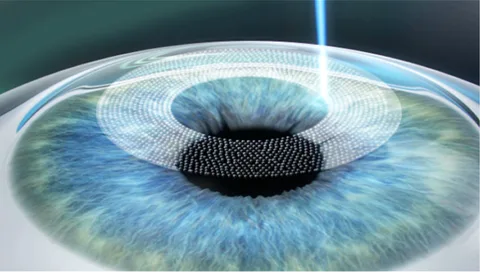
Standard LASIK
Flap Creation
STEP 1
Flap Creation

A highly precise femtosecond laser creates the corneal flap.
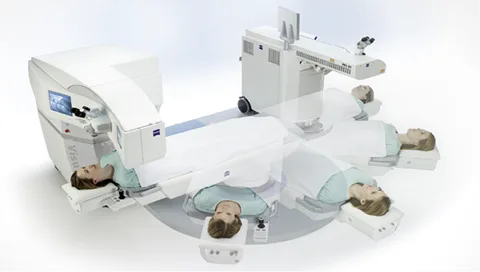
Repositioning
STEP 2
Repositioning

The patient moves from the femtosecond laser to the excimer laser for adjustment.
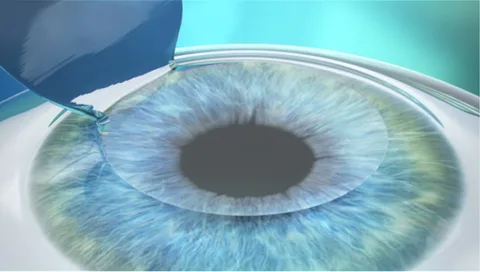
Lifting the Flap
STEP 3
Lifting the Flap

The corneal flap is gently lifted back to expose the corneal tissue to be treated.
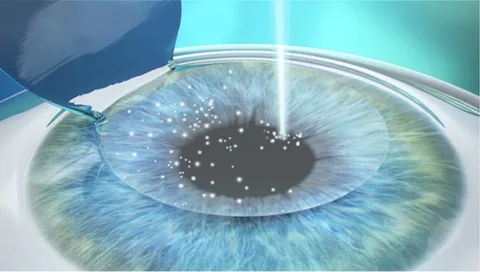
Correcting Refractive Error
STEP 4
Correcting Refractive Error

The excimer laser reshapes the tissue to correct the refractive error.
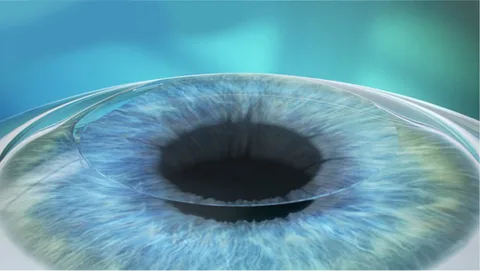
Repositioning the Flap
STEP 5
Repositioning the Flap

The corneal flap is repositioned to protect the eye.
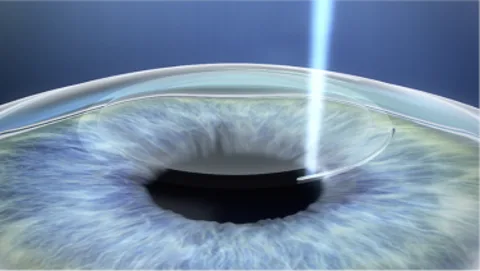
Expert SMILE
Creating the Lenticule
STEP 1
Creating the Lenticule

A tiny lenticule and small incision are created within the corneal stroma.
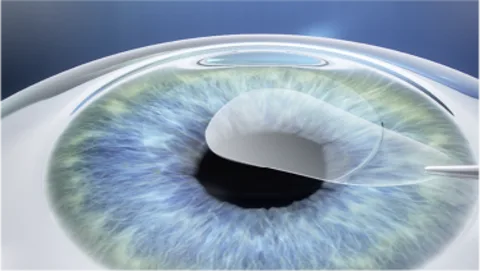
Removing the Lenticule
STEP 2
Removing the Lenticule

The lenticule is removed through the incision, minimizing damage to the cornea.
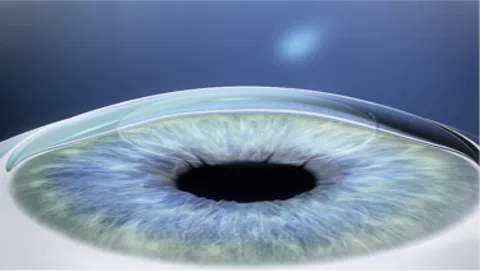
Correcting Refractive Error
STEP 3
Correcting Refractive Error

The cornea's shape changes accordingly, correcting the refractive error, and the incision heals naturally.
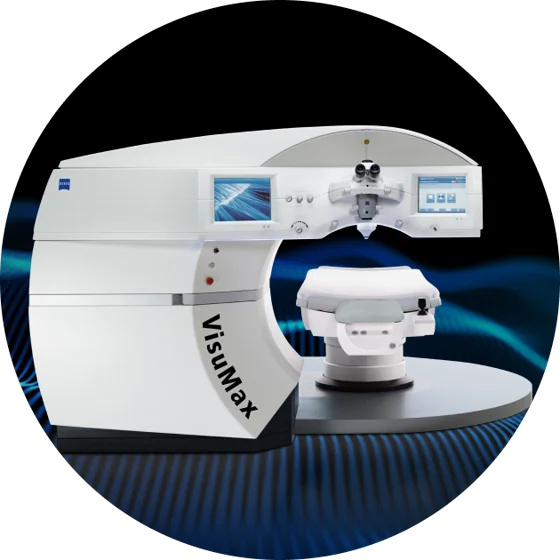
ZEISS VisuMax 500 laser system
German ZEISS Optical Technology

ZEISS VisuMax 500

A precise 500kHz high-speed laser beam uses ZEISS lens technology to create a smaller laser spot, keeping complication risk low with lower energy. A fully automatic eye-tracking system creates a precise three-dimensional corneal structure for more accurate, stable surgical results.

Compare

LASIK vs. Expert SMILE: What's the Difference?

Standard LASIK Flap Incision~20mm
Expert SMILE Small Incision~2mm

The incision area differs by roughly 10x — the main reason Expert SMILE tends to recover faster with less dryness

Incision
Standard LASIK

A flap is created and folded back

Expert SMILE

Done through an incision of about 2mm

Corneal surface
Standard LASIK

Widely exposed and reshaped

Expert SMILE

Only inner micro-tissue removed, less surface damage

Dryness & recovery
Standard LASIK

Dryness and similar effects relatively more reported

Expert SMILE

Less dryness and a tendency toward faster return to daily life

If you'd like to learn more about the standard LASIK option in the table above, see the All-Laser LASIK procedure under LASIK in Korea.

If you'd like a shorter-process option on the next-generation laser platform, see SMILE Pro pricing.

If you also deal with presbyopia, see whether a laser option such as Presbyopic SMILE LASIK, under Presbyopia Correction, might be right for you.

Compare

Comparing Three Techniques: SMILE LASIK, LASIK & LASEK

Smile LASIK
LASIK
LASEK
Incision Method
Micro-incision removes the lenticule, preserving more corneal structure
Correction completed via a corneal flap
Requires a surface-healing recovery process
Corneal Surface Treatment
Steady progress with less fluctuation; most notice clear improvement by the next day
Noticeable early improvement, with vision stabilizing quickly within days
Slower progress, needing time to rebuild surface stability
Recovery Pace
Lower foreign-body sensation, relatively stable comfort
Some early foreign-body sensation possible, gradually improving within days
More noticeable early sensitivity, requiring healing support and moisture care
Early Experience
Recovery pace varies by individual
Daily improvement often felt sooner, varying by individual
Early recovery is slower, varying by individual
Recovery

Post-Op Recovery Timeline

The timeline below reflects a typical recovery pace — actual results vary by individual and post-op exam findings.

Same DaySurgery is completed the same day — most patients resume daily activities that same day
2 WeeksCan resume strenuous exercise (running, weight training, ball sports, and other high-intensity activity)
3 WeeksEyelash extensions are OK
3–4 WeeksEye-area lifting treatments can be considered
1 MonthOnce a follow-up confirms your eyes are stable, contact lenses are OK
Real Patients

Real Patient Stories

Real international patients sharing their SMILE Laser experience at ClearSeoul Eye Clinic, from the procedure to recovery.

Instagram Reels
Inside the Exam Room

Real Pre-Op Exam & Consultation Footage

From corneal mapping to a face-to-face consultation with the Director, this is the actual visit on film — so you know what to expect before you arrive in Korea.

Dr. Lim Tae-hyung
Your Surgeon

Dr. Lim Tae-hyung

Medical Director · SMILE & Vision Correction

  • 서울대학교 의과대학 졸업
  • 서울아산병원 인턴 / 안과 전문의
  • 서울대학교 안과 전임의(각막, 백내장)
  • 前 한길안과병원 진료과장(라식&건성안 센터장)
  • 前 카톨릭관동대학교 의과대학 교수, 교육부장
  • 前 대한안과의사회 학술이사
  • 시력교정수술 20,000건 이상 집도(20년 이상 임상경력)
  • 대한안과학회(KOS)・미국백내장굴절수술학회(ASCRS)・유럽백내장굴절수술학회(ESCRS) 정회원
  • 대한검안학회 정회원
  • 대한콘택트렌즈연구회 정회원
  • 대한각막학회 정회원
  • 대한백내장굴절수술학회(KSCRS) 정회원
  • ReLEx SMILE 미세절개굴절수술 공식 인증
  • ICL 삽입술 공식 인증
  • Lumenis IPL 건성안 치료 강사·트레이닝 의사
  • 前 강남 아이미소안과 원장
  • 前 강남 IOK안과 원장
FAQ

FAQ

Q.How long does recovery take?
A.It varies, but the small incision tends to allow a relatively quick return to daily life. Light activity is usually possible after the next-day check-up; a detailed timeline is provided after your exam.
Q.Is the procedure painful?
A.Anesthetic eye drops are used, so discomfort during surgery is minimal. Temporary grittiness or watering may occur afterward but usually settles quickly.
Q.Is everyone eligible for SMILE?
A.Eligibility depends on corneal thickness, degree of myopia and eye health. If SMILE isn't suitable after the exam, we also review alternatives such as LASEK or ICL.
Q.I'm visiting from abroad — how many days should I plan for?
A.Since the exam, consultation and surgery for Expert SMILE are all completed on the same day (about 2–3 hours total), a 1-night, 2-day trip is usually enough. Chinese and English medical interpreters accompany you through consultation and exams, and also explain after-care for once you're home. Before you leave, the clinic prepares a surgical certificate (an additional 10,000 KRW) so you can continue follow-up care at a local eye clinic after returning home.
Q.Do I really not need to worry about language during the exam and surgery?
A.You don't need to worry. Chinese and English medical interpreters are stationed on-site full-time, supporting communication from the precision exam and consultation through Expert SMILE surgery and the follow-up visit.
Q.Is there an extra charge for the pre-surgery precision exam?
A.No. The precision exam before Expert SMILE is completely free, so you can undergo a full pre-surgery evaluation with peace of mind and decide whether to proceed.
Q.How long does it actually take from the exam to the end of surgery?
A.From the precision exam and consultation through the completion of Expert SMILE surgery, the whole process takes about 2 to 3 hours, leaving you plenty of time to rest or explore Seoul during your stay.
Q.PRK also doesn't require a corneal flap — how is it different from SMILE?
A.PRK removes the surface layer of the cornea, then reshapes the exposed inner layer with an excimer laser. PRK's drawbacks are more noticeable pain, a longer recovery period, and a relatively longer time for vision to stabilize, and it's not generally recommended for high myopia. SMILE also doesn't create a flap, but its recovery pace is closer to LASIK's.
Q.What preparation is needed before surgery?
A.Stop wearing clear soft contact lenses for 1 week, colored soft lenses for 2 weeks, and rigid (hard) lenses for 3 weeks or more beforehand, so your pre-op exam results are accurate. Also, please don't wear makeup or perfume on surgery day, and bring someone who can accompany you.
Q.How should I care for my eyes after surgery?
A.You can go back to rest after surgery; the clinic may prescribe eye drops to prevent infection and support healing. A follow-up exam is needed the next day, with ongoing monitoring over the following weeks to months.
Q.How soon after surgery can I wear contact lenses?
A.We recommend waiting until your 1-month follow-up confirms your eyes are stable before wearing contact lenses — please don't resume early on your own.
Q.How soon after surgery can I get eyelash extensions?
A.We recommend waiting at least 3 weeks after surgery so the eye area and incision have enough time to stabilize.
Location

Directions

6F, 17 Seocho-daero 77-gil, Seocho-gu, Seoul (BLOCK77)

From Incheon International Airport (ICN)
Airport Railway (AREX Express) + Subway
About 70–80 min

Incheon Airport → Seoul Station (Express Train, ~43 min) → transfer to Line 2 or Sinbundang Line → Gangnam Station

Airport Limousine Bus
About 70–90 min

Incheon Airport → bus toward Gangnam/Yeoksam (travel time varies with traffic)

Taxi / Private Transfer
About 50–70 min

Varies with traffic; can take longer during peak hours

※ Actual travel time varies with traffic and departure schedule; for reference only.