
Cataract Surgery
Surgery that corrects presbyopia and cataract together. ClearSeoul Eye Clinic offers cataract surgery in korea, a 2-minute walk from Gangnam Station, with English-speaking medical coordinators throughout and the same price for international and Korean patients — no hidden markups. We help plan your pre-op exam and trip, if you want to know the cost of cataract surgery in Korea and read reviews from international patients. Book a one-on-one consultation today.
Cataract Surgery in Korea: Choosing Cataract Surgery
- Overview: Surgery that corrects presbyopia and cataract together
- Length of Stay: We recommend planning a trip of at least 4 days/3 nights (including a next-morning post-op follow-up).
- Interpreter: English and Chinese medical interpreters are with you throughout — from the pre-op exam and consultation to surgery and post-op follow-up, professional staff help you communicate every step of the way.
Why Have Cataract Surgery Here?
Cataract surgery outcomes depend heavily on technique and lens choice — here's what actually affects your surgical plan and visual quality.
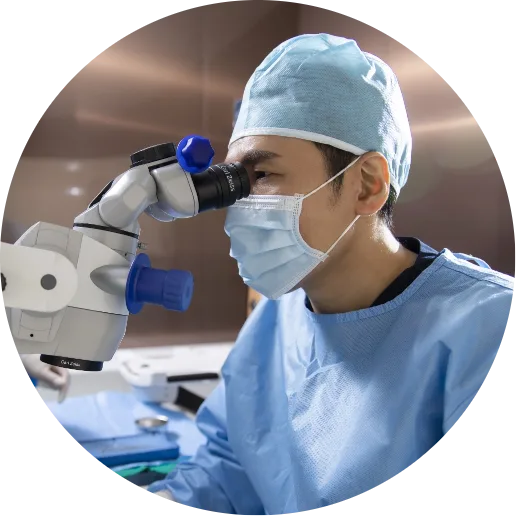
Performed using today's standard phacoemulsification (Phaco) technique — the clouded lens is precisely removed through a micro-incision, and the surgery itself is relatively brief.
Intraocular lenses can be chosen based on your lifestyle and eye condition — from monofocal lenses to multifocal or extended-depth-of-focus (EDOF) lenses that support distance, intermediate, and near vision.
If you want to address both cataracts and presbyopia at once, a multifocal or EDOF lens can be evaluated as a combined solution.
From pre-op exam through consultation to surgery, the whole process takes about 2–3 hours and can be completed in a single day; since a next-morning follow-up is required, plan for at least 4 days/3 nights, or up to about 7 days for a more comfortable pace.
Procedure Overview
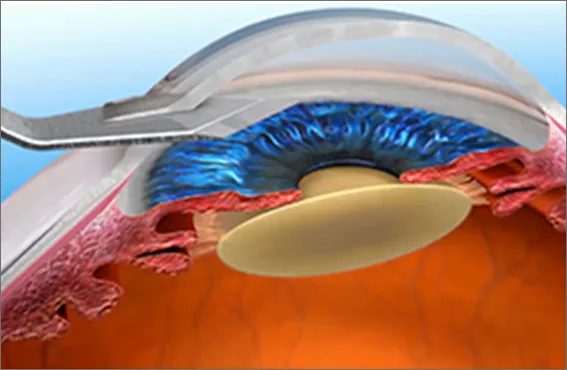
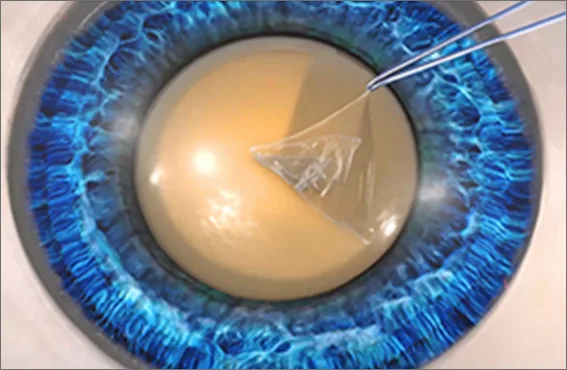
Cataract surgery restores vision by removing the clouded lens and inserting a clear intraocular lens (IOL) in its place. Today, ultrasonic phacoemulsification (Phaco) is the standard technique, performed safely and precisely through a small incision. The procedure consists of four main steps. First, a tiny incision is made in the cornea, followed by a capsulorhexis that creates a round opening in the front capsule surrounding the lens. The clouded lens is then broken up and aspirated with ultrasound, and an intraocular lens—its power calculated to match the patient's eye—is inserted into the empty capsular bag and settled into position. The IOL can be selected to suit the patient's lifestyle and eye condition, ranging from monofocal lenses to multifocal lenses that broadly support far, intermediate, and near vision. Because the power is determined by measuring the cornea and axial length through detailed testing, thorough pre-operative consultation and lens selection are key to a satisfying result. * Eligibility for surgery and recovery vary by individual eye condition; please decide after a detailed examination and consultation with a specialist.
If you or a family member traveling with you also need vision correction in addition to cataract surgery, we also offer LASIK in Korea and other vision correction options — feel free to ask about both during your consultation.
If you or a family member are also considering laser vision correction, you can learn more about SMILE Pro pricing, which uses the next-generation laser platform.
Cataract Surgery — Clinic & Equipment
The day text suddenly looks blurry, most people simply blame tired eyes and move on. But it can be a sign that presbyopia and cataract are beginning together. Cataract is a condition in which the lens — which acts like a camera lens inside the eye — gradually clouds with age; as the once-clear lens turns hazy, vision blurs as if looking through a steamed-up window. A precise exam and attentive care to see exactly what's happening in your eyes is the first step.
The change rarely arrives all at once — it builds up gradually in daily life. You hold your phone farther away, oncoming headlights seem to scatter more at night while driving, and reading a newspaper or book takes brighter light and longer focus than before. As cataract progresses, it can also bring doubled vision, colors that look yellowed and faded, and vision that's hard to correct even with a new glasses prescription. If these small inconveniences keep repeating, it's a good time to check what's changing in your eyes.
Presbyopia is a change in which the lens loses elasticity and focusing power, making it hard to focus up close — the near image forms behind the retina, so nearby text blurs. Cataract, by contrast, is a change in which the lens itself clouds and scatters light, blurring the image and lowering contrast. The two have different causes but often progress together at the same stage of life, so telling apart whether blur comes from reduced focusing power or from clouding — through a detailed exam — matters for setting the right treatment direction.
Cataract is a natural age-related change that nearly everyone experiences. So the line for when to take a serious look isn't drawn by age — it's drawn by whether the activities you care about in daily life are already being affected. Do you struggle with small print while reading and need brighter light? Do distant signs or signals look blurry when you're out? Does oncoming light feel especially glaring while driving at night? Do stairs feel harder to judge, making you more likely to misstep? If these signs keep showing up, don't wait any longer — now is a good time to see clearly again. Early evaluation and the right treatment protect your everyday life.
Presbyopia is the lens losing elasticity and focusing power so near images form behind the retina and blur, while cataract is the lens itself clouding and scattering light so images blur and lose contrast — the two often overlap at the same stage of life. What matters more than age is whether reading now needs brighter light, road signs look blurry when you're out, oncoming headlights feel unusually glaring at night, or stairs feel harder to judge — when these signs keep repeating, it's time for a detailed exam toward Korean cataract surgery.
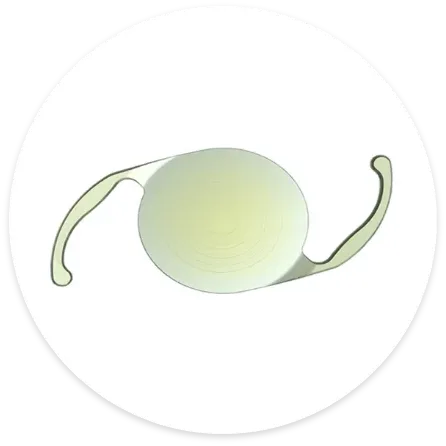
Cataract surgery removes the clouded lens and inserts a clear intraocular lens (IOL) in its place to restore vision. Today the standard technique is ultrasonic phacoemulsification (Phaco): through a tiny incision, the clouded lens is broken up and aspirated, and then an IOL — its power calculated to match your eye — is placed into the now-empty capsular bag and settled into position. It's a process of redesigning the eye so light can once again gather sharply where it should, after vision that had turned foggy and dim.
Intraocular lenses generally fall into three types — monofocal, extended depth-of-focus (EDOF), and multifocal — each supporting a different range of vision. A monofocal lens focuses at distance (roughly 5m and beyond), giving sharp far vision but requiring reading glasses for intermediate and near work. An EDOF lens bridges distance through intermediate range (about 60cm) smoothly, reducing reliance on glasses for tasks like computer work. A multifocal lens broadly supports far, intermediate and near (about 30cm), helping with a lifestyle that moves across distances without glasses. Cataract surgery is more than clearing away a foggy view — it's also a chance to choose the quality of vision you want.
A monofocal lens gives excellent clarity at one chosen distance — far or near — while a multifocal lens broadly supports far, intermediate, and near vision, reducing reliance on glasses. The right choice depends on your own lifestyle and visual habits.
Because an IOL stays in the eye for life, choosing carefully matters. Axial length, corneal curvature, anterior chamber depth and other eye measurements, the degree of lens clouding, the presence and amount of corneal astigmatism, even pupil size — a range of detailed exam data is combined to calculate an estimated refractive outcome, and from there monofocal, toric (astigmatism-correcting), EDOF and multifocal options are narrowed down to fit your eye's condition. If astigmatism is present, a toric lens that corrects it at the same time can offer a cleaner field of view. Working through this data together with your doctor before deciding is what shapes how satisfied you'll be with the result.
Axial length, corneal curvature (K1/K2), anterior chamber depth, lens thickness, corneal astigmatism, and pupil size are all precisely measured to calculate an estimated refractive outcome and decide whether a toric (astigmatism-correcting) lens is needed. A monofocal lens focuses beyond 5m, an EDOF lens extends to roughly 60cm, and a multifocal lens reaches down to about 30cm, so the lens you choose is grounded in numbers, not guesswork.
The severity of the cataract, corneal and retinal condition, and your daily visual needs all shape the IOL plan. A thorough exam is what makes a recommendation genuinely fit your own eyes.
No single lens suits everyone. If you read and work with documents often, an EDOF or multifocal lens that broadly supports near, intermediate and far distances helps make reading more comfortable; if you're often out walking or shopping, an EDOF lens centered on distance vision with a natural transition fits well. If you check your phone constantly, a lens strong at intermediate-to-near range helps; if you spend long hours at a computer, one optimized for intermediate vision improves efficiency; and if you drive often at night and are sensitive to glare, a monofocal (astigmatism-correcting) lens that prioritizes visual quality and safety may be worth considering. In the end, the answer is decided through in-depth discussion with your ophthalmologist, tailored to the priorities of how you actually use your eyes.
1. Exam and evaluation — a full eye exam assesses how far the cataract has progressed and your eye's overall health, and a suitable IOL is discussed together. 2. Removing the clouded lens — under local anesthesia, ultrasound phacoemulsification breaks up and removes the clouded lens through a small incision; the process is quick and the small incision makes recovery relatively easy. 3. Implanting the IOL — a foldable IOL is inserted through the same small incision into the capsular bag, unfolded and settled into position, replacing the original lens so the eye can focus again. 4. Tracking recovery — regular follow-up visits confirm vision and healing, checking that the wound is closing well and vision is steadily improving.
Through a tiny incision, the clouded lens is removed and an IOL is inserted — letting light focus clearly on the retina again and restoring clear vision.
Surgery follows four steps — exam and evaluation, removing the clouded lens, implanting the IOL, and tracking recovery — with a choice of 8 multifocal and EDOF lenses: Alcon's (USA) Clareon PanOptix, PanOptix, Vivity and Clareon Vivity, plus Johnson & Johnson's (USA) Eyhance, PureSee, Tecnis Synergy and Tecnis Symfony. Aftercare keeps tracking the IOL's position and dry-eye status well beyond the day of surgery.
Cataract surgery makes daily life a little lighter, not just clearer. Eyes tire less quickly while reading, signs and signals look sharp again on a walk or an errand, making each step more relaxed, and the light at home feels brighter and clearer than before. Better exam numbers matter, but the surgery's meaning is only complete once that change is felt in the small moments of everyday life.
Eye care continues after cataract surgery, too. Following your doctor's guidance for regular follow-up visits — tracking the IOL's position, eye pressure, vision and fundus health — allows any issue to be caught and addressed early. Dryness or a gritty feeling can linger after surgery, so building a healthy ocular surface with regular artificial tears, warm compresses, humidified air, and a balanced diet rich in omega-3 helps improve visual comfort and quality. Beyond cataract, mature eyes also carry risk for other eye conditions, so wearing sunglasses outdoors for UV protection, catching issues early through regular check-ups, eating a balanced diet, and avoiding overusing your eyes all add up to protect your long-term vision health.
Regular follow-up exams, everyday dry-eye management, and ongoing eye health care in your senior years are what keep your vision stable over the long term.
IOLs differ slightly in optical design and characteristics depending on the maker and model. We work with widely used multifocal and EDOF lenses including Alcon's (USA) Clareon PanOptix, PanOptix, Vivity and Clareon Vivity, and Johnson & Johnson's (USA) Eyhance, PureSee, Tecnis Synergy and Tecnis Symfony, choosing the model that fits each patient's eye condition and lifestyle priorities through consultation.
Beyond the American brands, options span six countries and eight lenses: Germany's ZEISS AT ELANA, AT LARA and AT LISA tri, Japan's HOYA Vivinex Gemetric, Hungary's Medicontur Liberty, Israel's Hanita Intensity, and Belgium's PhysIOL FineVision and FineVision HP. With this many brands and models, the final choice is best made after thorough discussion with your specialist, based on your detailed exam results and lifestyle.
From Germany's ZEISS — AT ELANA, AT LARA, AT LISA tri — and Japan's HOYA Vivinex Gemetric, to Hungary's Medicontur Liberty, Israel's Hanita Intensity, and Belgium's PhysIOL FineVision and FineVision HP, we offer consultation across IOLs from multiple manufacturers worldwide. With so many brands and models available, we recommend making the final choice only after thorough discussion with your specialist, based on your detailed exam results and lifestyle.
Beyond the American brands, options span six countries and eight lenses: Germany's ZEISS AT ELANA, AT LARA and AT LISA tri, Japan's HOYA Vivinex Gemetric, Hungary's Medicontur Liberty, Israel's Hanita Intensity, and Belgium's PhysIOL FineVision and FineVision HP. With this many brands and models, the final choice is best made after thorough discussion with your specialist, based on your detailed exam results and lifestyle.
Who It's For
Treatment Process
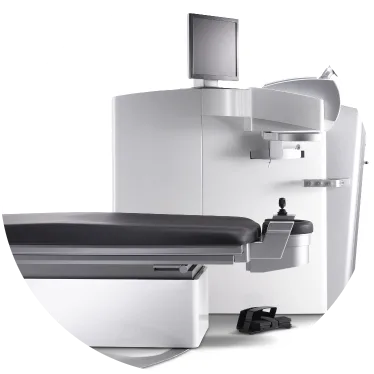
Equipment Used
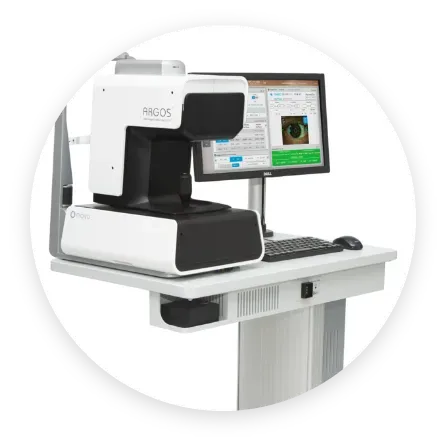
An optical biometer that precisely measures axial length and corneal curvature before cataract and presbyopia surgery to calculate intraocular lens power, supporting accurate lens selection.
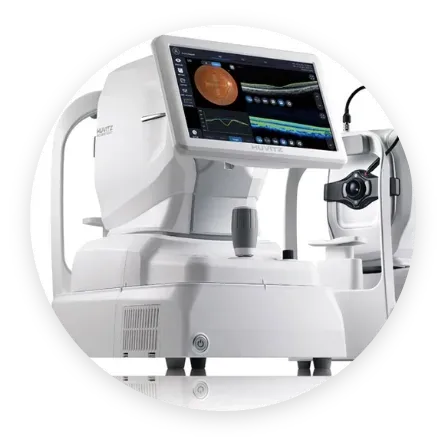
An optical coherence tomography device that captures cross-sections of the retina and optic nerve without contact, supporting early detection of glaucoma and retinal disease.
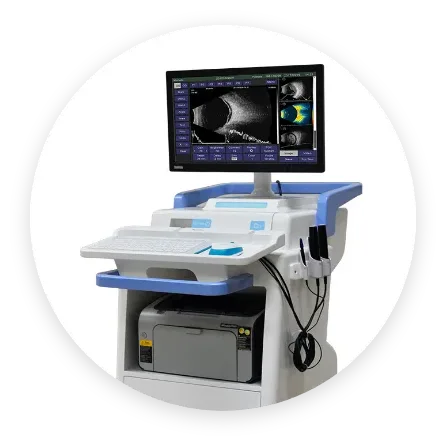
An ophthalmic ultrasound system that measures internal eye structures and axial length, supporting cataract surgical planning and diagnosis of eye conditions.
Expected Results
- Improves blurred vision by removing the clouded lens
- Restores vision with an intraocular lens
- Broad far/intermediate/near support when choosing a multifocal lens
In addition to cataract surgery, we also offer LASIK in Korea and other vision correction options — feel free to have a family member traveling with you ask about these too.
Frequently Asked Questions
The surgery itself is relatively short, allowing same-day discharge. From the detailed exam through consultation to the surgery itself, the entire process takes only about 2-3 hours in total, comfortably fitting within a single day's schedule.
Directions
6F, 17 Seocho-daero 77-gil, Seocho-gu, Seoul (BLOCK77)
Incheon Airport → Seoul Station (Express Train, ~43 min) → transfer to Line 2 or Sinbundang Line → Gangnam Station
Incheon Airport → bus toward Gangnam/Yeoksam (travel time varies with traffic)
Varies with traffic; can take longer during peak hours
※ Actual travel time varies with traffic and departure schedule; for reference only.