
ICL Surgery in Korea: Implantable Lens (ICL)
Lens implant correction for high myopia or thin corneas. ClearSeoul Eye Clinic offers icl surgery in korea, a 2-minute walk from Gangnam Station, with English-speaking medical coordinators throughout and the same price for international and Korean patients — no hidden markups. We help plan your pre-op exam and trip, if you want to know the cost of ICL lens implant surgery in Korea and read reviews from international patients. Book a one-on-one consultation today.
ICL Surgery in Korea: Choosing Implantable Lens (ICL)
- Overview: Lens implant correction for high myopia or thin corneas
- Pricing: Among ICL Surgery in Korea options, Implantable Lens (ICL)'s published starting price is KRW 4,000,000+, the same for international and Korean patients.
- Length of Stay: We recommend planning a 2-day/1-night trip (including a next-morning post-op check).
- Interpreter: English and Chinese medical interpreters are with you throughout — from the pre-op exam and consultation to surgery and post-op follow-up, professional staff help you communicate every step of the way.
Why Choose ICL?
ICL doesn't reshape the cornea at all — instead, a lens is implanted inside the eye to correct vision. Here's what actually affects your candidacy and lens choice.
No corneal tissue is removed and no flap is created, fully preserving corneal thickness and structure.
The implanted lens isn't permanent or irreversible — it can be removed or replaced after a doctor's evaluation if ever needed.
For patients with thinner corneas, high myopia, or severe dry eye that rules out laser correction, ICL can be considered as an alternative.
EVO+ ICL uses Collamer material with a central port design; GLAZE ICL uses an aspheric lens with a 2.8mm micro-incision. The style is chosen based on a precise match to your corneal and pupil measurements.
The pre-op exam and lens implantation can both be completed the same day (about 2–3 hours total). We recommend planning a 2-day/1-night trip (including a next-morning post-op check).
Procedure Overview
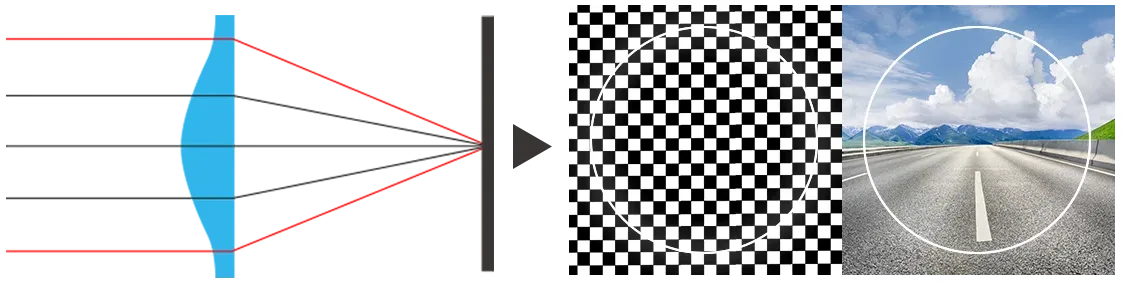
ICL (Implantable Collamer Lens) corrects vision by inserting a specially made thin lens inside the eye, without reshaping the cornea or creating a flap. It can be considered as an alternative for high myopia where corneal laser correction is difficult, for thin corneas, or for those with significant dry eye. Because no corneal tissue is removed, the natural structure of the cornea can be preserved, and the procedure is reversible — the implanted lens can be removed or replaced if needed. The lens is also designed to form a clear optical image, helping to reduce visual distortion and light scatter for a sharper field of view. That said, because a lens is placed inside the eye, careful pre-operative testing — including the internal space of the eye (anterior chamber depth) and corneal endothelial cells — is essential, and it is not suitable for everyone. We recommend thoroughly confirming whether it fits your eyes, along with the expected results and precautions, through a detailed examination and specialist consultation.
Implantable Lens (ICL) — Clinic & Equipment
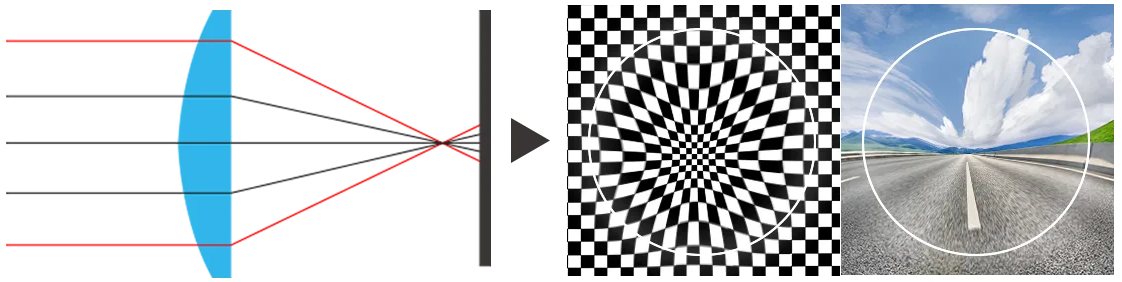

A vision correction method that doesn't reshape the cornea — even high myopia can keep its corneal structure intact. It focuses on three things together: preserving corneal structure, clear visual quality, and suitability for high myopia.
Thin corneas, high myopia, noticeable dry eye, or larger pupils at night can all limit how suitable laser vision correction is.
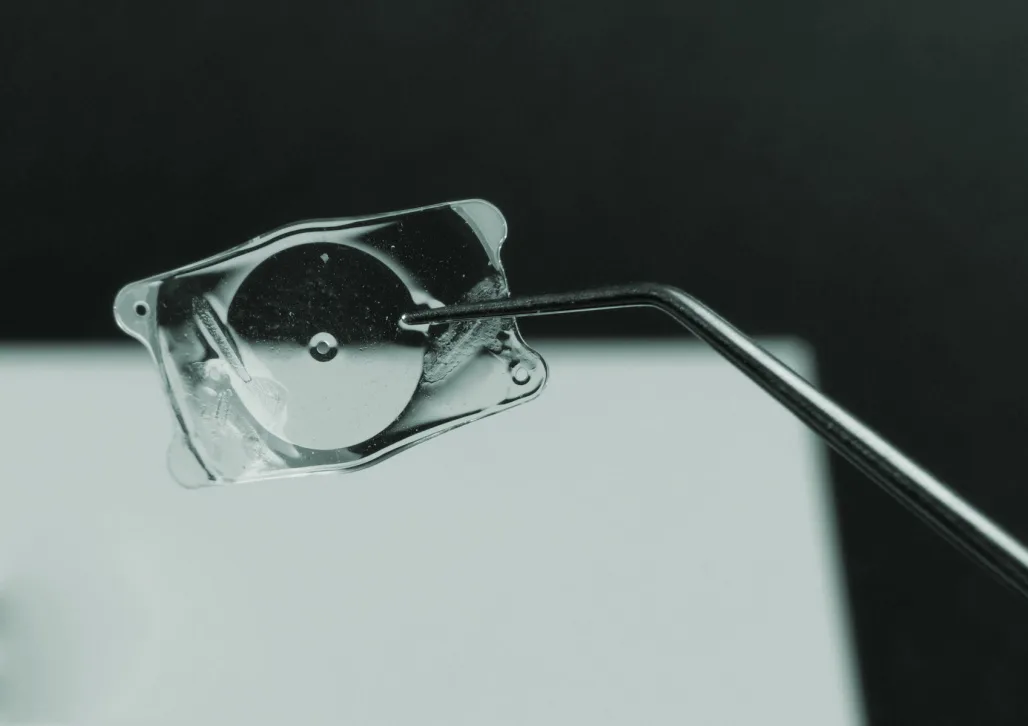
A Collamer lens is placed inside the eye — no cutting of the cornea, so the original corneal structure stays intact.
The cornea is the eye's outermost layer, responsible for most of its refractive power and protection. Laser correction thins the cornea by reshaping it, while ICL leaves corneal thickness and structure unchanged.
Thin corneas, high myopia, pronounced dry eye, or larger night pupils can all limit how well laser vision correction works. The key difference: laser surgery reshapes and thins the cornea by removing tissue, while ICL never touches the cornea at all — the lens goes inside the eye, leaving corneal thickness and structure fully intact. That's why patients considering laser vision correction in Korea whose corneal condition isn't ideal are also evaluated for ICL suitability during the pre-op consultation.
The ICL lens sits behind the iris and in front of the natural lens. It can be considered even for high myopia or thinner corneas, without cutting the cornea.
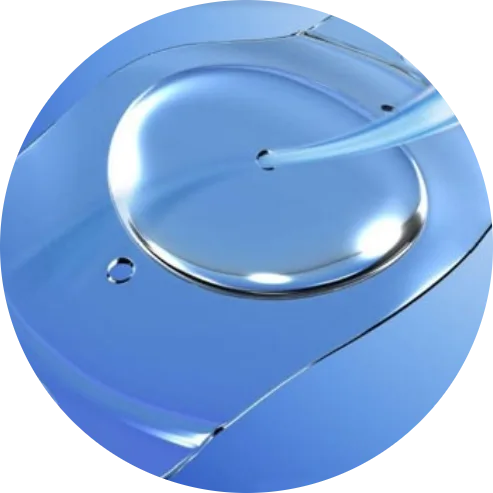
The central hole lets aqueous humor flow naturally after surgery, helping maintain the eye's normal balance. It also removes the need for a pre-op iridotomy, keeping the iris intact and reducing the glare, light sensitivity, or inflammation risk that can come with it — for better post-op comfort and visual quality.
ICL is reversible. Since it doesn't permanently alter the eye's internal structure, the doctor can remove it later if needed. That keeps options open in case your vision needs change or other treatment becomes necessary.
Through a roughly 3mm incision, the lens is inserted into the eye and fixed in place behind the iris.
EVO+ ICL is made of Collamer with a single central hole that lets aqueous humor flow naturally after surgery and can skip the pre-op iridotomy step entirely. GLAZE ICL (Optiflex Glaze) uses an aspheric lens design for a thinner lens and sharper vision, with a minimal 2.8mm incision that reduces tissue damage, speeds recovery, and lowers astigmatism risk. Korean eye clinics decide which lens fits better only after closely comparing corneal and pupil conditions.
Placed between the iris and the natural lens, it never touches the cornea, so the original corneal structure stays as it is. Since every eye is different, suitability still needs to be confirmed through detailed testing.
Anterior chamber depth, corneal endothelial cells, white-to-white distance (horizontal corneal diameter), and pupil condition are all measured to help determine lens power and size. These checks help the doctor judge safety and expected visual quality overall.
Follow-up visits continue after surgery — typically the next day, then at 1 week, 1 month, 3 months, 6 months, and 1 year — to check lens position, eye pressure, and overall eye condition. Even without obvious discomfort, sticking to this schedule helps catch and manage any changes early, protecting long-term visual quality and eye health.
Eye condition comes first, decision second. The ICL lens sits between the iris and the natural lens — it never touches the corneal endothelium and doesn't change corneal curvature, so corneal structure and strength stay intact while supporting stable, lasting visual quality.
Before surgery, several measurements are taken precisely — anterior chamber depth, corneal thickness, corneal endothelial cell density, and white-to-white distance — to set lens power and size. The lens is then placed through a roughly 3mm incision and fixed behind the iris, all without cutting the cornea. This kind of number-driven pre-op evaluation is a precision step Seoul eye clinics treat as essential when planning ICL surgery.
Rather than rushing into surgery, the eye's condition is checked first. Evaluation goes beyond just refractive power — it also looks at anterior chamber depth, corneal condition, pupil condition, and lens fit. Whether ICL suits you depends on a careful read of your eye's structure; not everyone fits the same approach, so conditions are confirmed first before discussing lens planning.
Who It's For
Treatment Process
Equipment Used
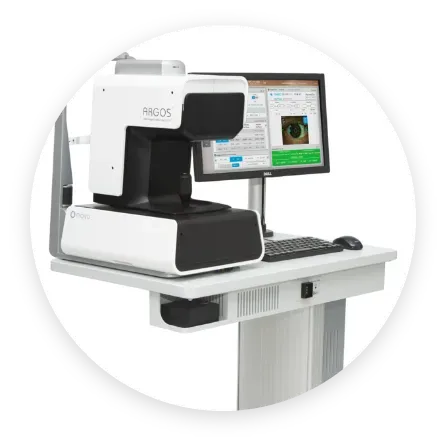
An optical biometer that precisely measures axial length and corneal curvature before cataract and presbyopia surgery to calculate intraocular lens power, supporting accurate lens selection.
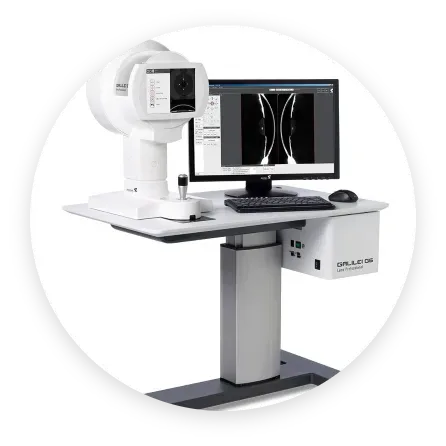
A corneal tomography and topography analyzer that maps the front and back surfaces and thickness of the cornea in 3D, helping assess suitability for vision correction surgery.
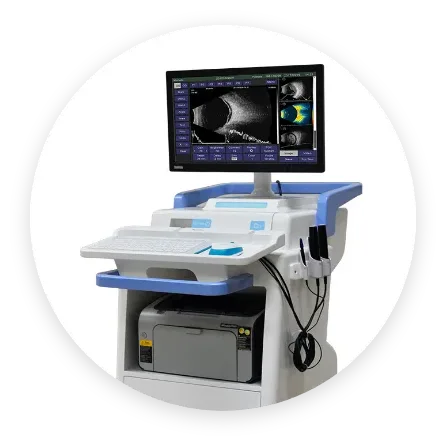
An ophthalmic ultrasound system that measures internal eye structures and axial length, supporting cataract surgical planning and diagnosis of eye conditions.
Expected Results
- Helps reduce reliance on glasses even with high myopia
- Preserving the cornea may reduce surface-damage burden
- Reversibility — the lens may be removed if necessary
- A wide correction range supports clearer vision
Frequently Asked Questions
ICL sits inside the eye, so it generally isn't felt. The adaptation process and precautions are explained in detail at your check-up.
Directions
6F, 17 Seocho-daero 77-gil, Seocho-gu, Seoul (BLOCK77)
Incheon Airport → Seoul Station (Express Train, ~43 min) → transfer to Line 2 or Sinbundang Line → Gangnam Station
Incheon Airport → bus toward Gangnam/Yeoksam (travel time varies with traffic)
Varies with traffic; can take longer during peak hours
※ Actual travel time varies with traffic and departure schedule; for reference only.