
StreamLight LASEK
LASEK that reduces pain and recovery burden. ClearSeoul Eye Clinic offers lasik in korea, a 2-minute walk from Gangnam Station, with English-speaking medical coordinators throughout and the same price for international and Korean patients — no hidden markups. We help plan your pre-op exam and trip, if you want to know the cost of vision correction in Korea and read reviews from international patients. Book a one-on-one consultation today.
LASIK in Korea: Choosing StreamLight LASEK
- Overview: LASEK that reduces pain and recovery burden
- Pricing: Among LASIK in Korea options, StreamLight LASEK's published starting price is KRW 1,490,000+, the same for international and Korean patients.
- Length of Stay: We recommend planning a 2-day/1-night trip (including a next-morning post-op check).
- Interpreter: English and Chinese medical interpreters are with you throughout — from the pre-op exam and consultation to surgery and post-op follow-up, professional staff help you communicate every step of the way.
Why Choose StreamLight LASEK?
StreamLight LASEK doesn't create a corneal flap at all — here's what actually affects whether it's right for you and how to plan your trip.
Because no flap is created, patients with less corneal thickness to spare may still be candidates — your pre-op exam determines final suitability.
Without lifting a flap, relatively more corneal structure is preserved — also suitable for people in boxing, combat sports, or other activities with a higher risk of eye impact.
Surface healing generally takes longer than with LASIK; the StreamLight method is designed to ease that recovery burden — plan for a more generous stay.
The pre-op exam, consultation, and surgery can all be completed the same day (about 2–3 hours total). We recommend planning a 2-day/1-night trip (including a next-morning post-op check); because surface recovery takes longer, plan extra time to rest and heal.
Procedure Overview
Streamlight LASEK is a surface-ablation procedure that corrects vision with a laser after preparing the corneal surface (epithelium), without creating a corneal flap. Because no flap is lifted, there is no flap-related burden, making it an option worth considering for people with thinner corneas or those uneasy about flap-based methods. The corneal epithelium is gently removed, the exposed surface is treated with precise laser application, and after correction, additional care is provided to support protection and healing. Since no flap is made, more of the corneal structure can be preserved relatively intact, which also suits people who engage in activities with frequent impact. While the surface heals, there can be temporary foreign-body sensation or blurred vision, so the recovery period should be carefully considered, and aftercare during healing can affect the outcome. We recommend confirming whether it fits your corneal condition, along with the expected results and recovery process, through a detailed examination and specialist consultation.
StreamLight LASEK — Clinic & Equipment
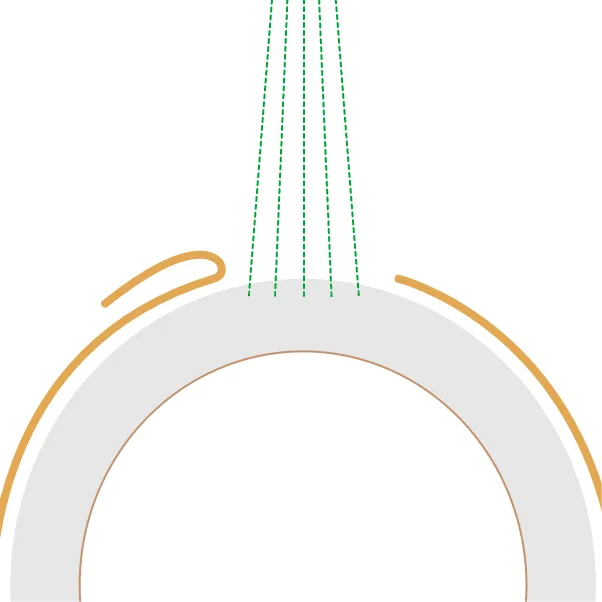
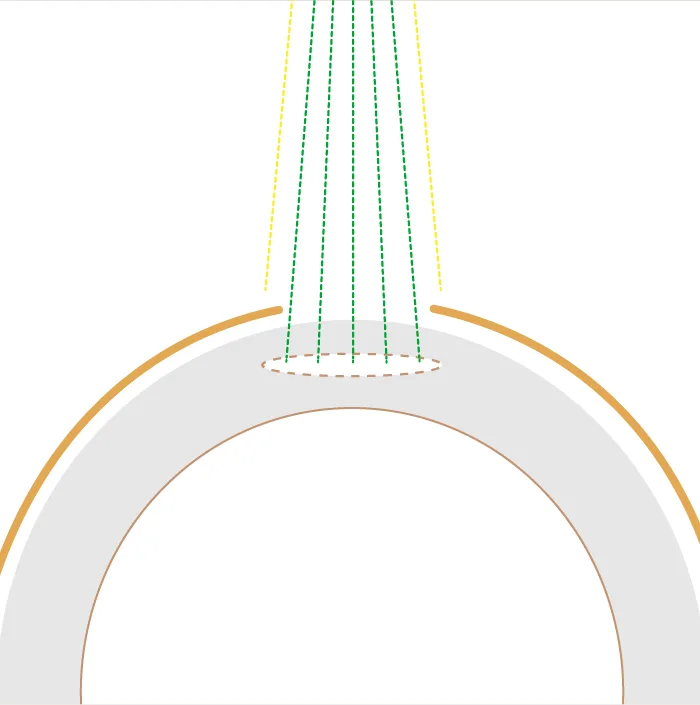
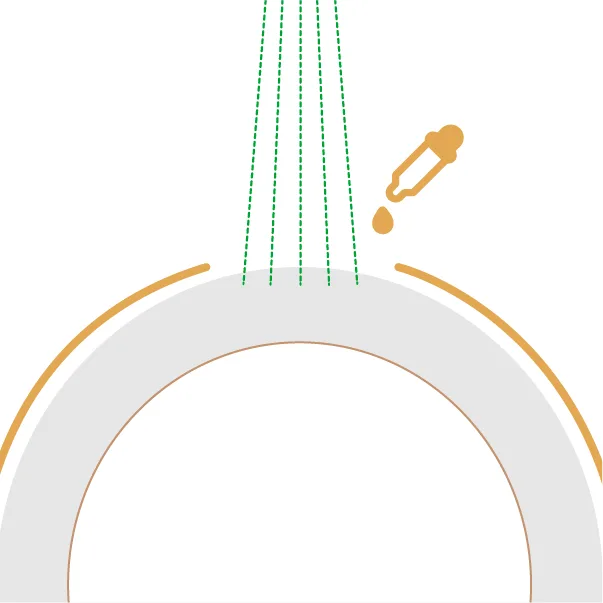
More than a gentler LASEK — a non-contact approach that balances precision with a steadier recovery rhythm. (One-Step EX500)
but pain, recovery speed, and whether daily life can continue smoothly matter just as much.
A One-Step approach completes epithelial removal and vision correction together, reducing the use of alcohol and mechanical instruments so the whole process is more precise and smoother.
The EX500 laser removes the corneal epithelium, then automatically switches into vision-correction mode to complete a finer surface correction in a single continuous step.
A corneal epithelium removal mode, automatic switching to vision-correction mode, multi-dimensional eye tracking, and the long-validated WaveLight platform form the core of Stream Light LASEK.
Stream Light LASEK is built around the WaveLight EX500 laser system, using a One-Step design that automatically carries the procedure from epithelium removal straight into vision correction, sharply reducing the need for alcohol and mechanical instruments. For patients researching Korean laser eye surgery, this means a more precise, continuous process — the core idea behind being more than just 'a less painful LASEK.'
44% less post-operative pain, 35% shorter surgery time, and a 78% smaller epithelial wound.
Non-contact LASEK precisely controls laser energy to treat the epithelium without directly touching the corneal surface, preserving more of the eye's natural structure and nerve connections. With less alcohol and mechanical contact, the surface heals through a gentler sequence — stabilizing, repairing, realigning, and clearing.
Every eye is unique — corneal condition, refractive status, and overall eye health all shape which method suits you and the visual quality you can expect. A thorough, precise pre-operative exam — covering corneal surface condition, refractive status, and a full eye evaluation — is the starting point for a personalized plan and safe treatment.
The corneal epithelium is removed, vision correction follows immediately, and vision gradually returns to a stable, clear state.
Clinical data from ClearSeoul Eye Center show that EX500 laser's non-contact epithelium removal reduces post-op pain by 44%, cuts surgery time by 35%, and shrinks the epithelial wound area by 78%. Compared with traditional LASEK, which relies on alcohol and mechanical scraping, Stream Light LASEK leaves a smaller wound and milder pain, and covers a wider prescription range — from low-to-moderate up to high myopia.
Less reliance on mechanical tools and alcohol makes the process more precise.
Before every Stream Light LASEK procedure, the VARIO precision diagnostic system captures a 22,000-point corneal topography map, and refraction, corneal thickness, astigmatism axis, and eye structure are fully mapped before surgical parameters are set. Whether a patient's priority is less pain, faster recovery, or a more convenient process, the surgery itself follows a clear three-step flow — epithelium removal, then vision correction, then a steady return to stable vision.
Follow-up visits and lifestyle guidance support your eyes gently as your vision stabilizes and daily life resumes.
Conventional LASEK vs StreamLight
Who It's For
Treatment Process
Equipment Used
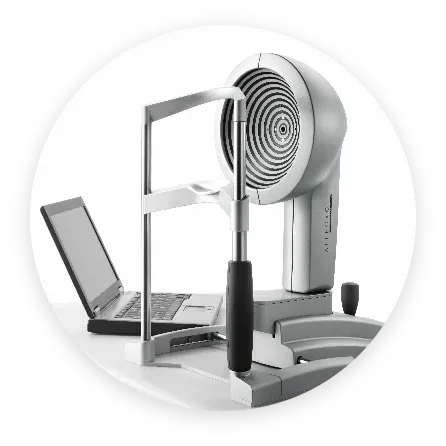
A corneal topographer that precisely measures the curvature of the corneal surface to detect astigmatism and corneal irregularities, providing baseline data for vision-correction planning.
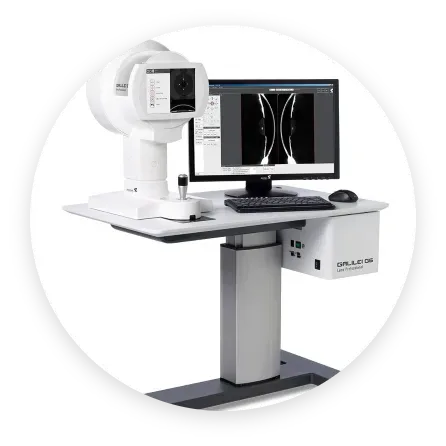
A corneal tomography and topography analyzer that maps the front and back surfaces and thickness of the cornea in 3D, helping assess suitability for vision correction surgery.
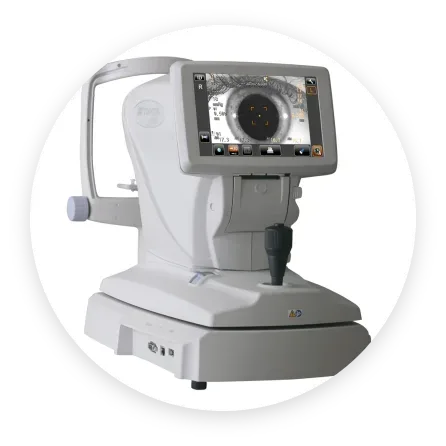
An automated device that quickly measures refractive errors — myopia, hyperopia, astigmatism — and corneal curvature, forming the basis for accurate prescription assessment.
Expected Results
- Helps reduce dependence on glasses and contact lenses
- Without a flap, corneal structure may be better preserved
- Can be considered even with thinner corneas
- Designed to reduce recovery-phase pain and burden for greater comfort
Frequently Asked Questions
LASEK generally needs more time for surface healing than LASIK. The StreamLight method, however, is designed to reduce recovery burden; a detailed timeline follows your exam.
Directions
6F, 17 Seocho-daero 77-gil, Seocho-gu, Seoul (BLOCK77)
Incheon Airport → Seoul Station (Express Train, ~43 min) → transfer to Line 2 or Sinbundang Line → Gangnam Station
Incheon Airport → bus toward Gangnam/Yeoksam (travel time varies with traffic)
Varies with traffic; can take longer during peak hours
※ Actual travel time varies with traffic and departure schedule; for reference only.